
Why Are There So Many LGBTQ+ Flags? The Debate Around Pride, Identity, and Representation
Why One Pride Flag Was Never Enough. It started with a rainbow… but it didn’t end there
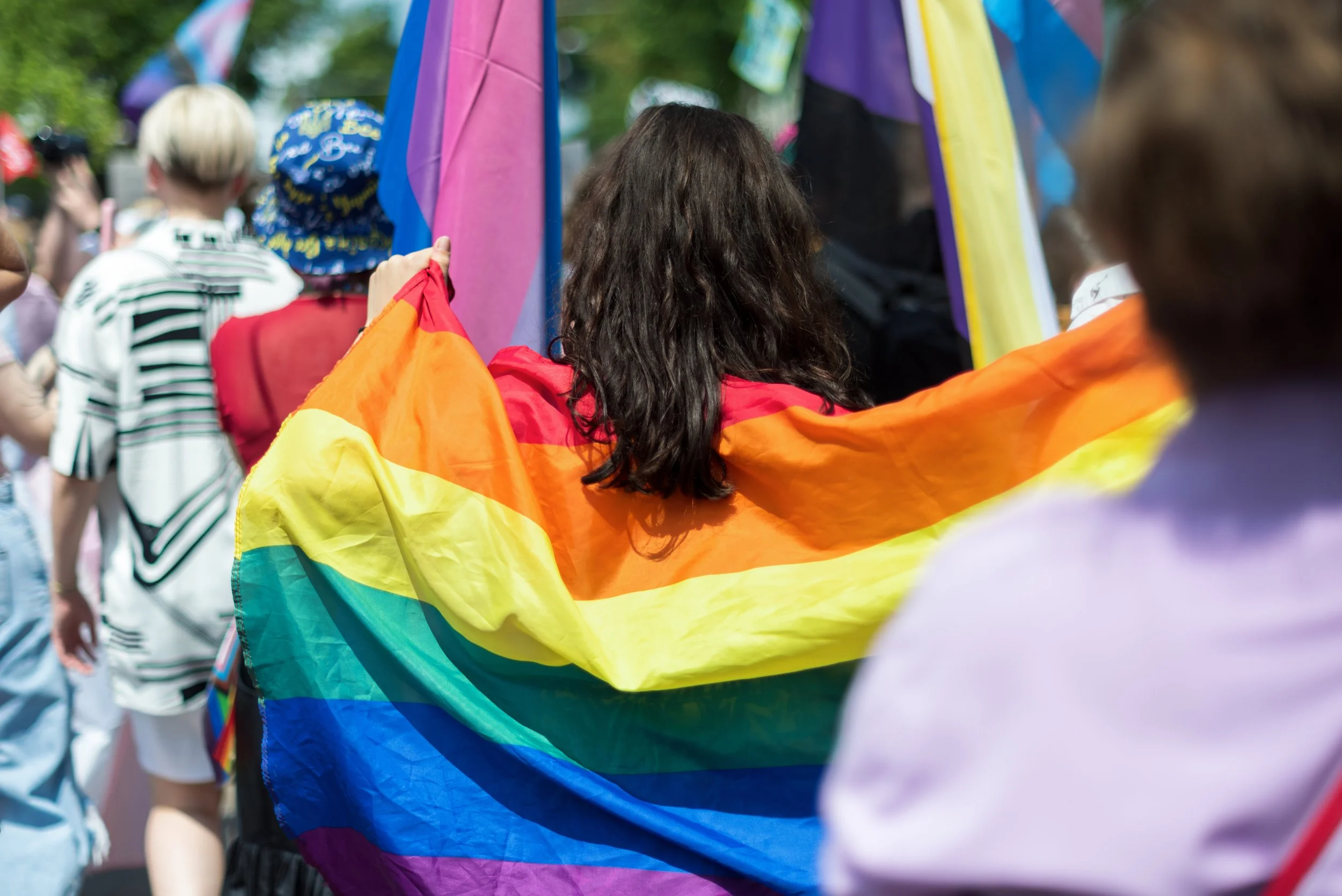
©Frimufilms
Walk into any Pride parade today and you’ll see it instantly: not one flag, but many. Different shapes, added colors, new meanings.
What was once a single, unifying symbol has become a spectrum within the spectrum. And that raises a question many people are quietly asking:
How many Pride flags do we actually need?
From symbol to movement: when the rainbow became political
It all started with $1,000 and 1,000 yards of fabric. Hear from Gilbert Baker, the creator of the rainbow pride flag.
Back in 1978, artist and activist Gilbert Baker designed a flag that wasn’t meant to divide—it was meant to hold everything.
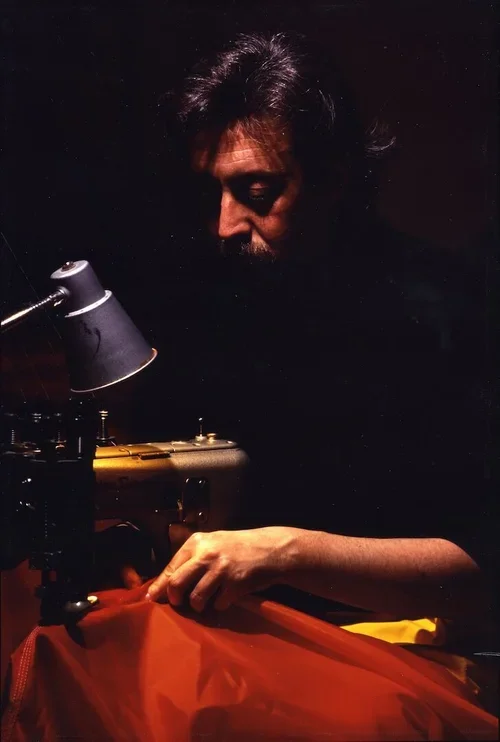
Gilbert Baker sewing the mile-long rainbow flag for the 1994 New York City Stonewall 25 Pride Parade. Photograph by Mick Hicks- Gilbert Baker Flag Collection (2002-41), GLBT Historical Society.
Each color told a story. Life. Healing. Sunlight. Nature. Spirit.
But over time, practicality reshaped the design. Fabrics were limited. Production had constraints. The flag became simpler—six colors—and globally recognizable.
It worked. It unified. It became iconic.
So why change it?
The shift: visibility vs. universality
Fast forward to 2018. A new design appears—the Progress Pride Flag. Suddenly, the rainbow isn’t just horizontal anymore. A triangle cuts into it. New colors enter the conversation.
Not randomly—but intentionally. The Progress Pride flag was developed in 2018 by non-binary American artist and designer Daniel Quasar (they/them). The redesign celebrates the diversity of the LGBTQ+ community and calls for a more inclusive society.
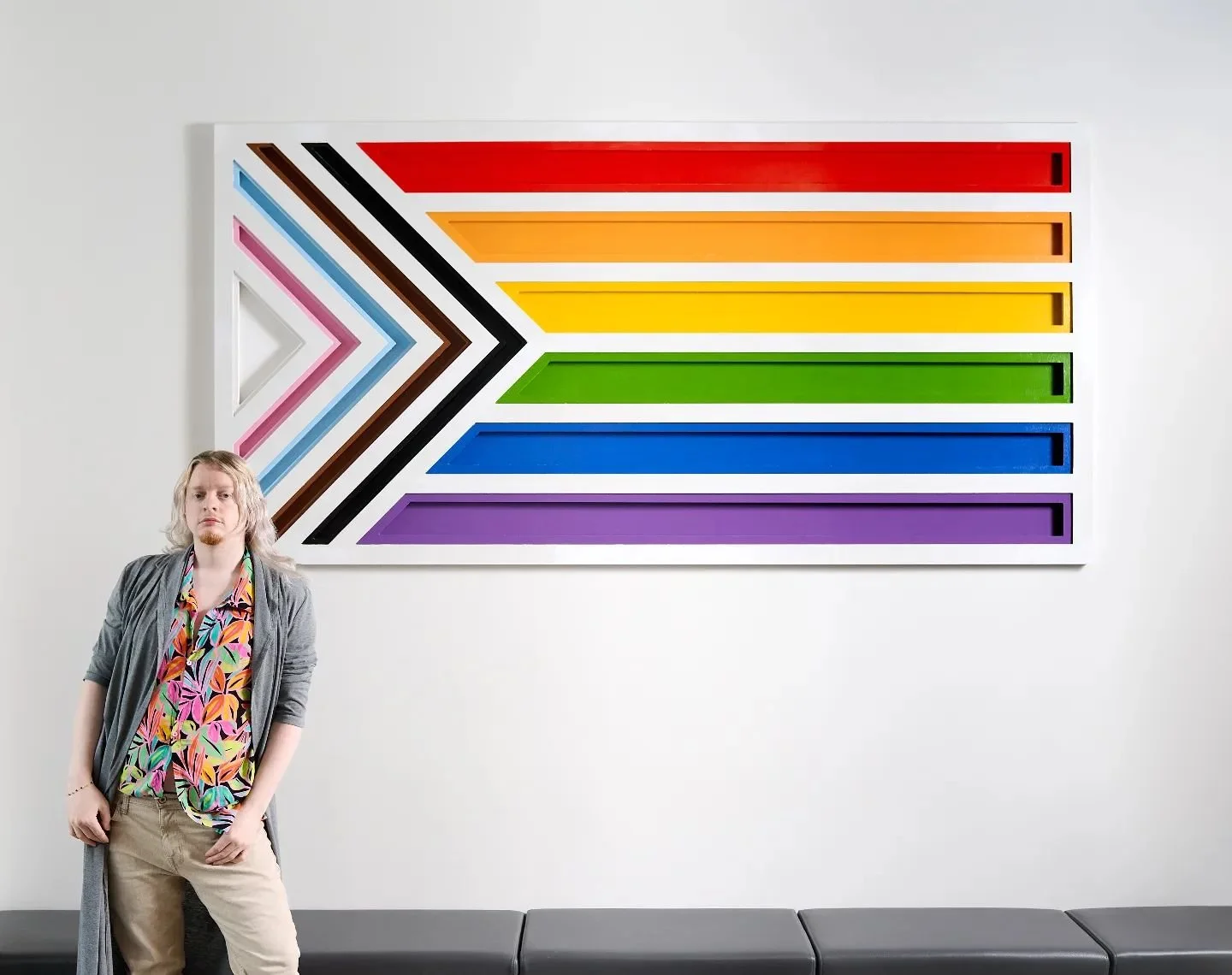
©Daniel Quasar Facebook
It’s a visual statement:
Some people within the LGBTQ+ community are still less visible, less protected, less represented.
Trans communities.
Racialized queer people.
Those living with or lost to HIV.
The message is clear:
“If the flag represents everyone… why add more?”
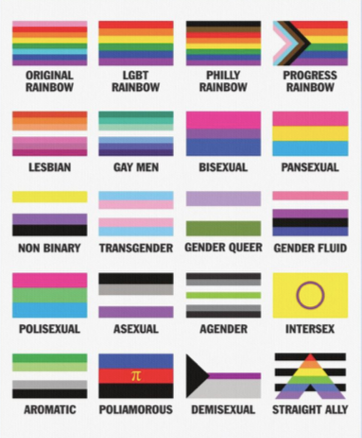
Here’s where the tension lives.
For some, the original rainbow already includes everyone.
It’s universal, timeless, and emotionally powerful.
For others, that universality feels… abstract.
Because in real life, not everyone experiences Pride the same way.
“Inclusion isn’t symbolic if people still feel invisible.”
That’s the argument pushing newer designs forward.
The conversation gets more complex
In 2021, another version emerges—this time explicitly including intersex representation. The Global Inclusive Pride flag Project was created by Valentino Vecchietti (she/her) to promote meaningful actions and create authenticity in inclusive Pride flag use. More colors. More symbols. More intention. And also… more questions.
Because while many celebrate this evolution, others feel something is being lost:
Clarity. Simplicity. Unity.
So… which Pride flag is the “right” one?

Maybe that’s the wrong question. Or maybe it’s exactly the question we need to ask.
Because this isn’t just about design. It’s about how a community sees itself—and who gets centered in that vision.
Is Pride about one shared identity? Or about making space for every difference within it?
Let’s talk about it
This isn’t a closed conversation. It’s happening right now—in parades, online, in friend groups, in activism spaces.
So let’s open it up:
What do you think?
Which Pride flag do you connect with the most—and why?
Do we need more visibility, or more unity?
There’s no single answer. But your voice is part of it.
Call to action
👉 Read the full article via our bio.site or visit queerlandmedia.com
Have a story, perspective, or voice the world should hear?
📩 Write to us: hello@queerlandmedia.com
