
La Bola Negra Is More Than a Movie—It’s a Love Letter to Queer Generations
At Helsinki International Film Festival, A Queer Story Took Center Stage
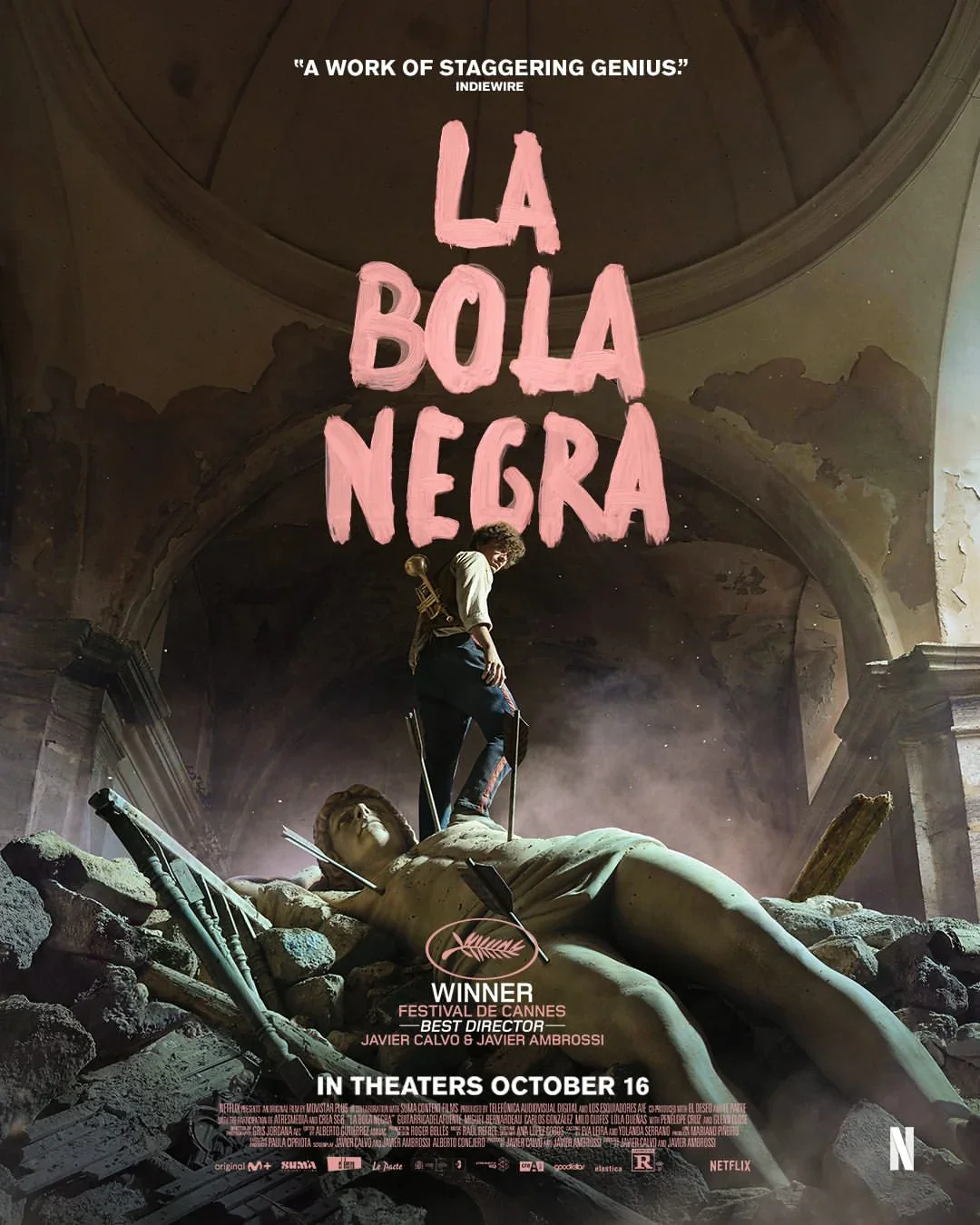
On September 17, the 39th edition of the Helsinki International Film Festival Love & Anarchy officially opened in Helsinki, Finland, with a film that immediately reminded audiences why cinema still has the power to heal, provoke and transform.
That film was La Bola Negra (The Black Ball). Already celebrated internationally and arriving with extraordinary critical acclaim, the latest work from Spanish filmmakers Javier Calvo and Javier Ambrossi — known worldwide as Los Javis — opened the festival with the kind of emotional force that stays with you long after the credits roll.
This is not simply another historical drama. It is not merely a film about Federico García Lorca. It is not only a love story between men.
“La Bola Negra is a big, ambitious queer film made by two queer directors and centered around three gay protagonists. None of us ever imagined we would one day lead a film like this, have a platform, let alone premiere our work at the Cannes Film Festival. And yet, here we are.”
Instead, La Bola Negra becomes something far more ambitious: a cinematic conversation between generations of queer people, a meditation on inherited pain and hidden desire, and a powerful reflection on what it has meant — and what it still means — to be gay.
“La Bola Negra is not about the past. It is about every queer person who has ever been told they don't belong.”
Synopsis: Three Men, Three Eras, One Shared Legacy

©Images: Netflix
Inspired by one of Federico García Lorca's unfinished final works, La Bola Negra follows three gay men living in different moments of Spanish history, whose lives become connected through memory, desire, repression and identity.
In 1932, Carlos (Milo Quifes) faces social exclusion after rumors surrounding his sexuality threaten his place within an elite social club.
In 1935, Esteban (Guitarricadelafuente) finds himself caught between ideology and desire after being recruited into the fascist military, where an unexpected connection with a prisoner challenges everything he believes about himself.
Decades later, in 2017, Alberto (Carlos González), a young gay historian, begins uncovering family secrets that reveal how the wounds of previous generations continue to echo through the present.
As their stories unfold, the film builds a stunning emotional tapestry where past and present merge, demonstrating how queer lives are often connected through invisible threads of memory, silence and survival.
A Love Letter to Queer History
One of the most remarkable achievements of La Bola Negra is that it refuses to reduce LGBTQ+ history to victimhood. Yes, the film confronts discrimination. Yes, it explores repression. Yes, it acknowledges the devastating violence inflicted upon queer people throughout history.
“Ninety years ago, Federico García Lorca was murdered by fascism because he was gay. To everyone who believes we are going to take a step backward in the fight for LGBTQ+ rights, I have bad news: we are here tonight, together with this extraordinary cast and crew, and we are not going anywhere.”
But what makes the film extraordinary is its insistence on celebrating queer existence despite all of it. The story recognizes the countless lives interrupted by fear, shame and persecution, while simultaneously honoring the resilience, courage and beauty that allowed generations of LGBTQ+ people to survive.
As a gay viewer, this aspect hit particularly hard. There are moments throughout the film that feel deeply personal, even when they are set nearly a century ago. Because beneath the historical context lies something universal: the experience of wanting to love openly, wanting to be seen, and wanting to exist without apology.
That emotional truth transcends nationality, age and generation.
The Performances That Bring History to Life

Penelope Cruz - Images: Netflix
The film introduces extraordinary performances from Milo Quifes and musician-turned-actor Guitarricadelafuente, whose screen presence is both vulnerable and magnetic.
Carlos González brings emotional depth and contemporary nuance to Alberto, creating a bridge between the audience and the historical narratives unfolding before him. The supporting cast elevates the film even further. Academy Award winner Penélope Cruz delivers another deeply affecting performance, proving once again why she remains one of Spain's most compelling actors.
Meanwhile, Academy Award nominee Glenn Close brings gravitas, emotional intelligence and remarkable subtlety to her role, reinforcing the film's international scope while never overshadowing its deeply Spanish identity. Together, the ensemble creates a world that feels intimate, authentic and profoundly human.
Los Javis Reach a New Artistic Peak
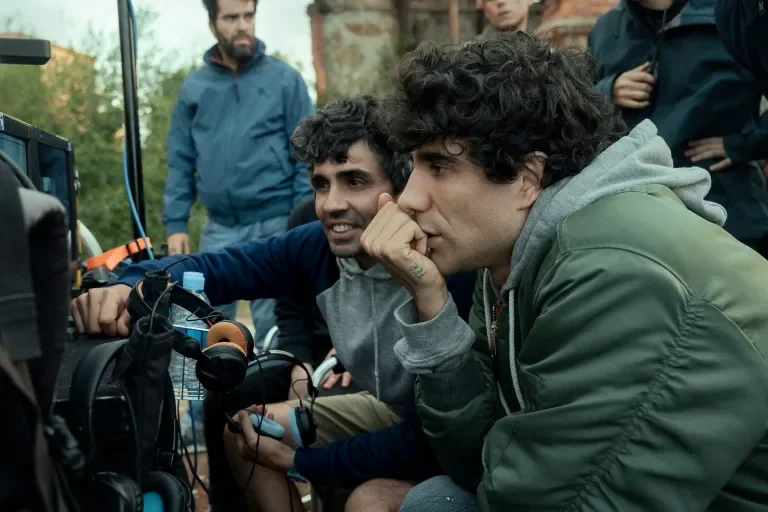
Javier Ambrossi and Javier Calvo
By now, Los Javis have become one of the most influential creative forces in Spanish-language entertainment. Before conquering international cinema, Javier Calvo and Javier Ambrossi transformed television through projects that redefined queer representation for a new generation.
Their breakout phenomenon, Paquita Salas, combined comedy, tenderness and cultural commentary in a way that became instantly iconic. Then came Veneno, widely regarded as one of the most important LGBTQ+ television series ever produced in Spanish, telling the story of transgender icon Cristina Ortiz Rodríguez, La Veneno, with unprecedented humanity and complexity.
Their influence extends beyond scripted storytelling. Since 2021, Los Javis have also served as permanent judges on Drag Race España, helping introduce queer culture, visibility and artistic expression to millions of viewers.
Yet La Bola Negra feels different. It feels bigger. More ambitious. More mature.
This is Los Javis operating at a scale we have never seen before while maintaining the emotional honesty that made audiences fall in love with their work in the first place.
Why Is It Called La Bola Negra?
The title carries one of the film's most powerful metaphors. In Federico García Lorca's unfinished work, membership to an exclusive club required voting through colored balls: a white ball signified acceptance, while a black ball represented rejection.
A single black ball could be enough to exclude someone forever. Within the film, that symbol expands into something much larger. The black ball becomes a representation of every moment queer people have been denied access, denied dignity, denied opportunity or denied the freedom to love openly.
As Los Javis have explained, it becomes a symbol of what it has meant to be gay throughout history.
A mark of exclusion transformed into a badge of remembrance.
And perhaps even resistance.
More Than a Queer Film
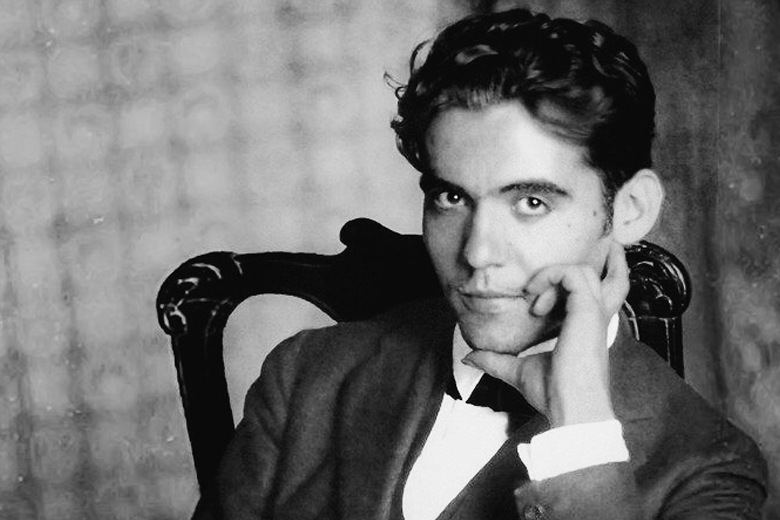
Federico Garcia Lorca 1898 - 1936
Some audiences may ask whether La Bola Negra is an LGBTQ+ film. The answer is yes. Unapologetically yes. But limiting it to that category would also be a mistake, because while its heart is undeniably queer, its themes are universal.
Identity. Belonging. Family. Memory. Love. Loss. Inheritance.
“As Lorca said, ‘We must remember toward tomorrow.’ We want to speak for those who were never allowed to speak, who were never given the chance to live or love freely, and for those who were murdered, so that history never repeats itself.”
The film speaks directly to LGBTQ+ audiences because it understands our history, but it speaks to everyone because it understands humanity. That is a far more difficult achievement. And it is precisely why La Bola Negra feels destined to endure.
Final Verdict: A Defining Queer Film for a New Generation
La Bola Negra is one of the most emotionally powerful LGBTQ+ films to emerge from Spain in recent years. It is ambitious without becoming inaccessible. Political without becoming preachy. Historical without becoming trapped in nostalgia.
Most importantly, it reminds us that queer history is not a separate history.
It is part of our collective story. Through extraordinary performances, breathtaking cinematography, a magnificent score and the most accomplished direction of Los Javis' careers, La Bola Negra transforms memory into something living and urgent.
Federico García Lorca's spirit is present throughout the film, but so are the voices of countless queer people who never had the chance to tell their own stories. This film speaks for them and it does so beautifully, for LGBTQ+ audiences, La Bola Negra is not simply a movie.
It is recognition.
It is remembrance.
And above all, it is a declaration that our stories deserve to be seen, preserved and celebrated.
Spain has officially chosen its contender for the Best International Feature Film at the Oscars: La Bola Negra (The Black Ball). The highly anticipated film hits Netflix this December 2026. Get ready for a cinematic masterpiece that is already generating massive award-season buzz!
Queerland Media Community
Have a story, experience, community initiative or LGBTQ+ news tip you'd like us to cover? We would love to hear from you.
Contact the editorial team at hello@queerlandmedia.com.
We are always looking for stories that amplify queer voices, celebrate diversity and strengthen our global LGBTQ+ community.
