
EU ruling makes history: same-sex marriage must be recognized across all member states
©Freepic.com
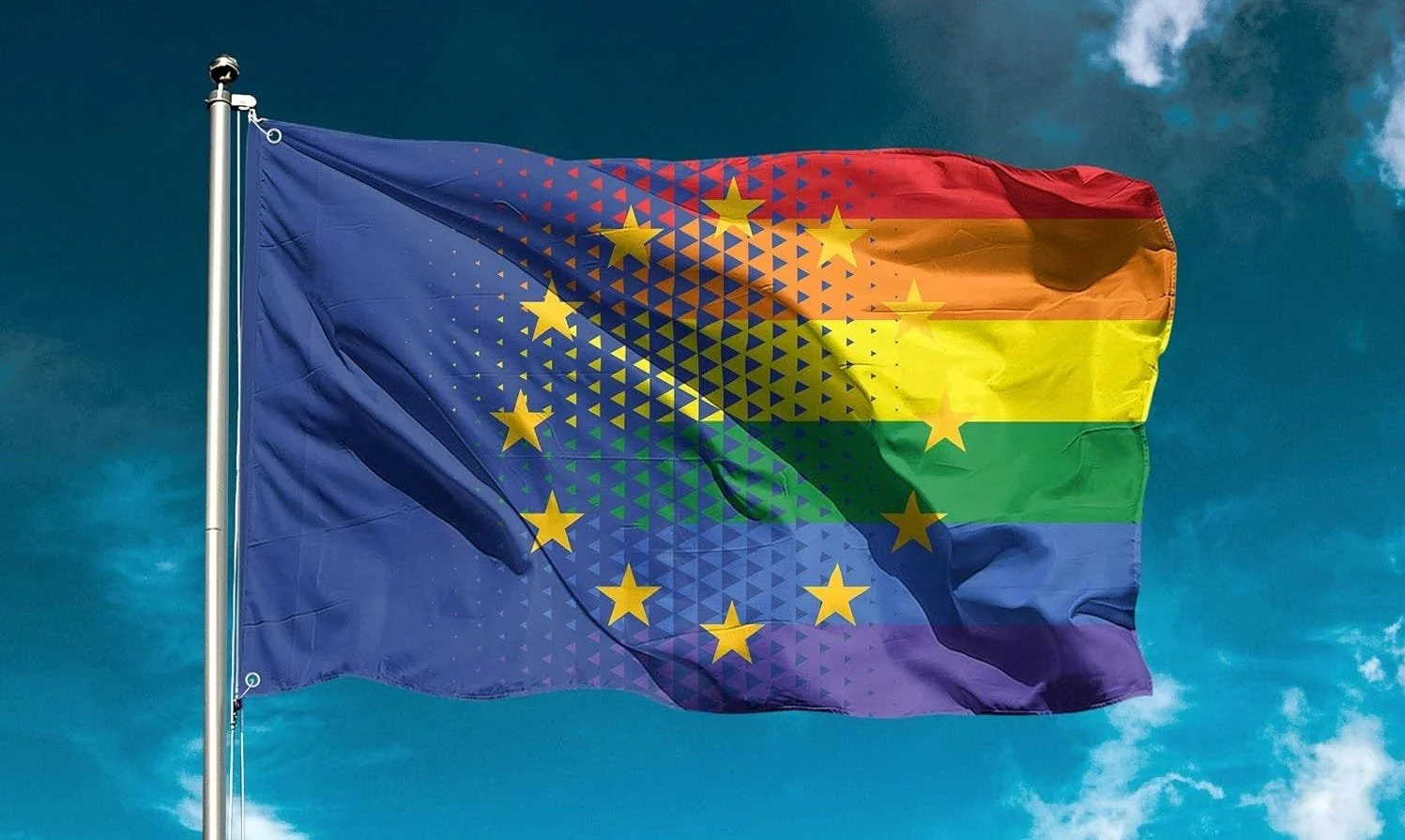
Some legal decisions don’t just update legislation—they rewire the cultural heartbeat of a continent. What just happened in the European Union is not a procedural footnote; it’s one of those turning points where the world feels a little wider, a little fairer. In a single ruling, the Court of Justice of the European Union has declared something astonishingly simple: love does not lose validity at the border.
Marriage between same-sex couples is no longer a national privilege—it is a European reality.
A DECISION THAT REDEFINES THE PERSONAL
Europe is taking a historic step toward equality. The European justice system has made it clear: every member state must recognize same-sex marriages celebrated in any other EU country, even if their own national laws do not allow LGBTQ+ couples to marry. No exceptions.
Right now, several countries in Eastern Europe still refuse to acknowledge these unions. Nations such as Bulgaria, Lithuania, Latvia, Serbia, Turkey, Moldova, Ukraine and others continue to deny legal recognition to same-sex couples. That refusal is no longer acceptable under European law.
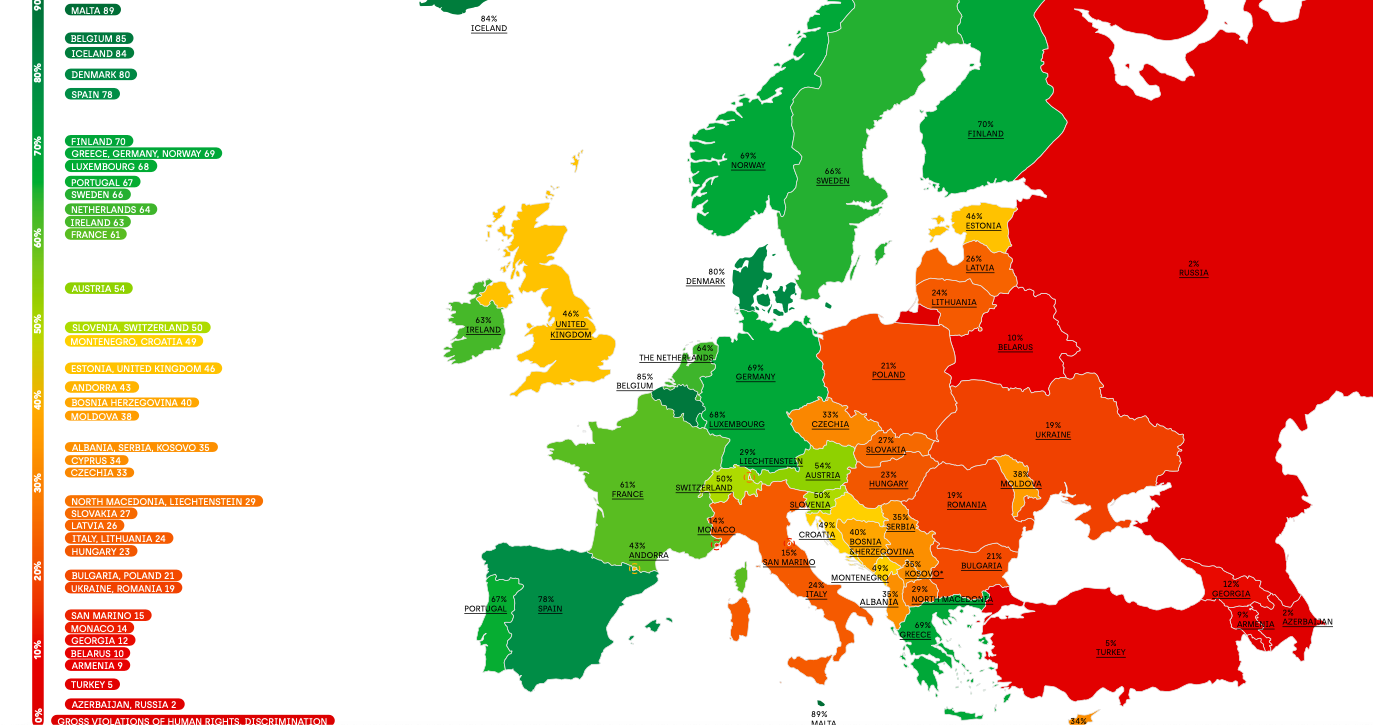
©RAINBOWMAP - REFLECTING THE LEGAL AND POLICY SITUATION FOR THE HUMAN RIGHTS OF LESBIAN, GAY, BISEXUAL, TRANS AND INTERSEX (LGBTI) PEOPLE IN EUROPE.
Marriage equality for same-sex couples is only available in 22 countries. 18 is the number of countries without any legal protection of same-sex partnerships. More information: Rainbow Map - ILGA-Europe
The court’s position is straightforward. If two citizens of the European Union get legally married in one member state, no other country within the EU can deny the existence of that marriage. Doing so violates European legislation, the right to free movement, and one of the most basic human rights: the right to a private and family life.
In simpler terms, while each country may have its own rules for marriage, those rules cannot stand in the way of European values and freedoms. LGBTQ+ families must be able to build their lives anywhere in the Union without losing their rights at the border.

©Credit: REUTERS
The judges were explicit: all 27 member states must recognize these marriages, even if their domestic laws do not allow them. This ruling reinforces something our community has been demanding for years — equality is not negotiable, and our families are not second-class.
Denying recognition to a same-sex marriage violates fundamental European rights: freedom of movement and the right to private and family life. Read more about the decision.
Europe is finally saying: “A family doesn’t cease to exist because someone crossed a border.”
The couple who changed the rules
©FreePik.com
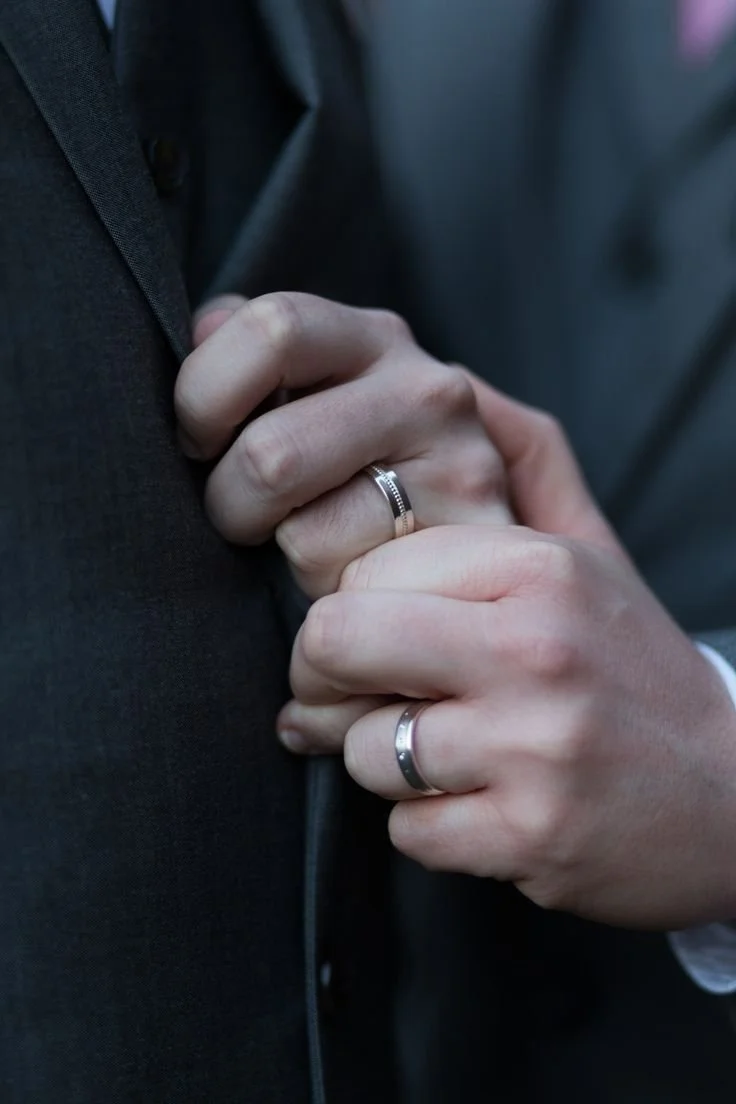
This ruling started with a simple, human story. A Polish couple married in Berlin, and wanted to return home together—not as roommates, not as strangers, but as husbands. Poland refused. A bureaucratic refusal turned into a continental wake-up call. That couple’s frustration is now European jurisprudence.
Thanks to them, eleven Eastern European countries can no longer treat equality as optional. The continent’s map is shifting. Slowly, but undoubtedly.
That bureaucratic rejection is now a binding precedent across a continent. Europe woke up because one couple refused to be erased.
“Sometimes equality doesn't begin with a march. Sometimes it begins with paperwork.”
The Nordic blueprint
To understand the magnitude of this moment, look north. Sweden, Norway, Iceland, Denmark, and Finland embrace marriage equality not as an exception, but as the norm. Finland joined in 2017, closing the Nordic chapter. That year marked more than a legal update—it was the moment equality stopped being aspirational and became routine. Estonia is the only Baltic country to have legalized same-sex marriage, a change that took effect in 2024.
Finland wasn’t the first, but it arrived with certainty. It became the last Nordic sovereign state to legalize same-sex marriage, proving that justice can arrive late without losing relevance.
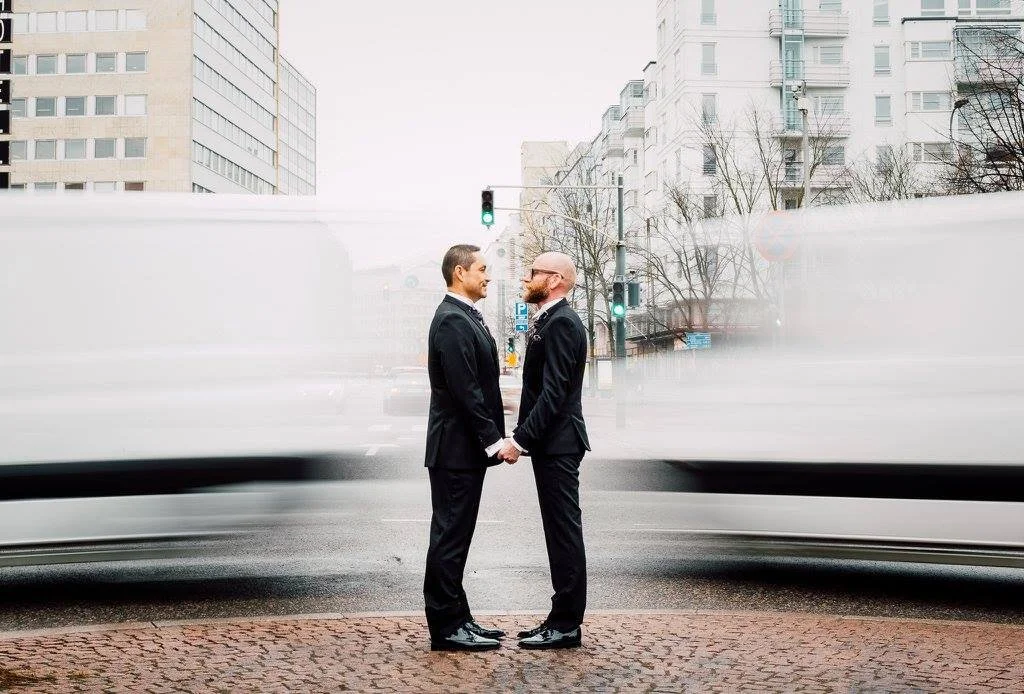
©SatuMali @lifeof2men Hannu Medina and Raul Medina were one of the first same-sex couples to get married in Finland on March 1, 2017.
The Nordic countries legalized same-sex marriage years ago:
2009 – Sweden & Norway
2010 – Iceland
2012 – Denmark
2017 – Finland
Finland’s late arrival completed the Nordic chapter and set a cultural standard: equality is not a trend—it’s governance.
Marriage equality is about more than weddings
Marriage equality is not really about weddings. It is about agency. It is about living without erasing yourself at the border. It is about knowing your family exists everywhere you go.
In a world where only one in five countries allows same-sex marriage, this European ruling is not a regional event. It is a global warning shot. According to the global LGBTQ+ rights database Equaldex, only 38 countries on the planet currently recognize marriage equality. It’s wild to think about, especially considering that most of those victories happened fairly recently, just in the first decades of the 21st century.

©equaldex.com Same-sex marriage is legal in only 38 countries.
In other words, while progress has been real and powerful, it’s still far from universal. Love may be everywhere, but the laws that protect it clearly aren’t—at least not yet.
It is about:
rights that travel
families without disclaimers
dignity that doesn’t need subtitles
Only one in five countries recognizes same-sex marriage. Europe just changed the statistics—and expectations.
“Once a right is recognized, ignoring it becomes impossible.”
The next frontier
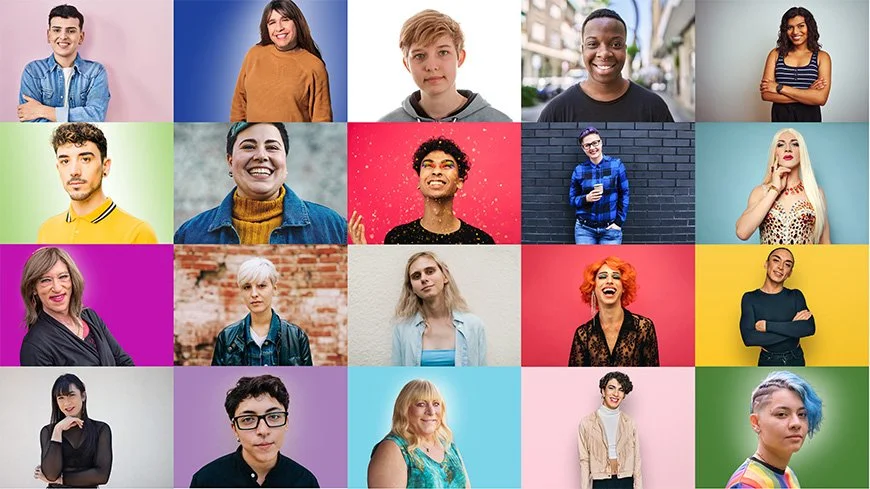
©Council Of Europe -
Today, we celebrate. Because rights once recognized are harder to ignore. Because every victory leaves a runway lit for the next.
But let’s be honest: this story isn’t complete until the trans community and non-binary people stop carrying the heaviest burden of legal invisibility. Marriage equality is a chapter—beautiful, long-awaited, necessary—but not the final page.
Europe has spoken. Love no longer asks permission. But respect, dignity, and full recognition for every identity? That’s the next frontier.
Trans people and non-binary identities still face barriers that marriage laws alone cannot fix.
Legal recognition cannot be selective. Equality that excludes some is not equality—it’s decor. Read more here about the Council Of Europe.
Conclusion
Europe has decided that love does not require permissions, stamps, or national instructions.
From now on, marriages travel with their owners. Families don’t dissolve at passport control.
History just got wider, and love got louder.
Continue reading at
queerlandmedia.com
