
Some people walk into a room. Others make an entrance without even trying. In the heart of Helsinki, one summer afternoon, I crossed paths with a woman whose presence was impossible to ignore. Her name is Roseta La León.
Some people are simply born to stand out
I still remember my years living in California and New York City. During those long walks through the streets, I always found myself fascinated by the people I encountered. Sometimes they were celebrities or artists. Other times, they were complete strangers. But they all had something in common: a presence you could feel from a distance.
You know the kind of people I'm talking about. Those who don't need to ask for attention because they naturally command it. People who seem comfortable in their own skin, who carry themselves with confidence and have that unmistakable light of their own. And then, one summer afternoon in Helsinki, I experienced that feeling all over again.
I was walking through the Kallio neighborhood in the Finnish capital with my husband when someone caught my attention from a distance.
First, there was the sound: a pair of 10-centimetre heels making their presence known against the pavement. Then came the long, wavy black hair, dark sunglasses, a beautiful coat and a posture that said everything without saying a word. Confidence? Absolutely. Elegance? Without question. And judging by the number of people turning their heads, I wasn't the only one who had noticed her.
That woman was Roseta La León.
A presence that brings back memories of iconic women
Watching Roseta walk through the streets of Helsinki took me somewhere else entirely. It reminded me of the larger-than-life personalities who have left their mark on LGBTQ+ culture across Latin America and Spain.
I thought of Cristina La Veneno, whose unapologetic personality and visibility challenged expectations in Spanish popular LGBTQ+ culture. I also found myself remembering Selena Quintanilla, an icon whose presence, style and influence reached far beyond music.
And, perhaps unexpectedly, I was transported to the cinematic universe of Pedro Almodóvar and his unforgettable Chicas Almodóvar — women whose personalities, strength and individuality became part of the magic of Spanish cinema.
So, who is Roseta La León?
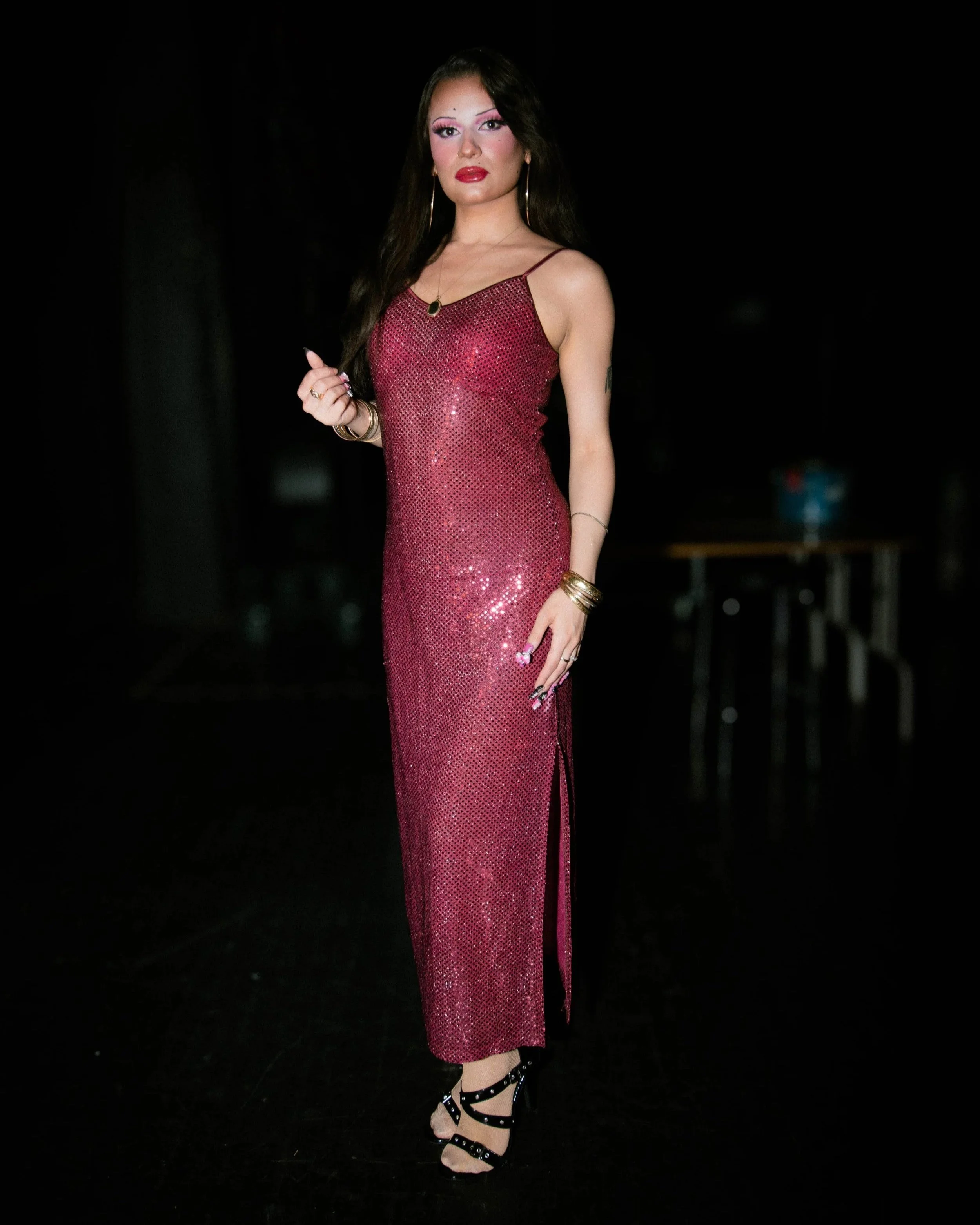
Picture by ©aliisa_photo
But first let me tell you something: meeting Roseta It was one of those conversations you wish could last for hours. Natural, entertaining, full of personality and, above all, genuine. A few weeks after that first encounter, we arranged to meet at Musiikkitalo in Helsinki. We sat down, ordered a good morning coffee and allowed the conversation to unfold.
Her artistic journey, her experiences, her relationship with performance and what it means to express herself in a world that doesn't always make room for individuality.
QM: I remember the very first time I saw you perform was at an AFRONTE event at Mascot.
ROSETA: Do you remember which edition it was?
QM: I believe it was the 5th edition. Friday the Professor introduced you as the first Finnish-Romani artist set to make a debut at the Finnish National Opera. Your voice is truly beautiful.
ROSETA: Thank you very much.
QM: Today, how would the person behind the performer describe who Roseta La León truly is?
ROSETA: When you say the name Roseta La León, it immediately paints a specific image. I’ve been described in so many ways—sensual, a femme fatale, a leading lady. In reality, I’m a humble girl just living my fabulous lifestyle. I’m a not-so-regular girl in a not-so-regular world, living a not-so-regular life. Ultimately, I’m just a girl trying to find her own peace of mind in a messed-up world by doing what I love.
There is definitely a fire in La León. When I really dig into who I am, I’m someone who fights for the right to be myself. I try to live my life in an unapologetic, bold, and loud way, while maintaining complete honesty. It’s a celebration of femininity and authenticity. Everything people see on the surface when they hear my name or watch me on stage comes directly from my inner monologue. Roseta La León is everything you think she can be—and in reality, she’s even more than that.
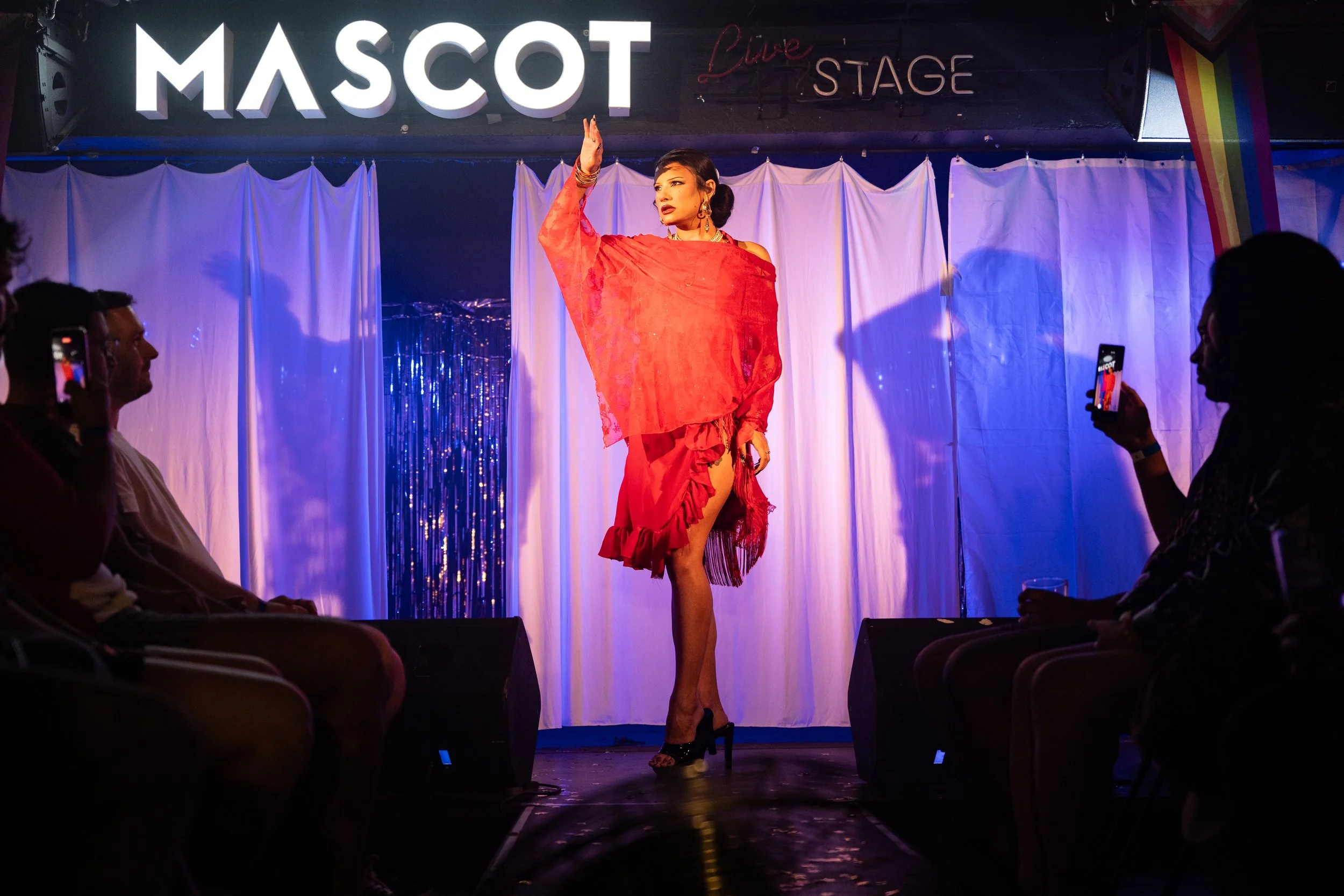
Roseta La León on the stage in MASCOT performers during one of her shows with Afronte
QM: Our first brief encounter on the streets of Kallio radiated a striking confidence and sensuality, reminiscent of a classic Pedro Almodóvar film. Where does that captivating energy and cinematic presence come from?
ROSETA: I think learning to enjoy the way we look is a learning curve for all women, and it certainly took me a long time. Even though I feel like I’ve always been confident, I’m still learning about myself and how to feel truly comfortable in my own skin. As women, we are constantly fed ideals of what a "perfect woman" looks like from a male perspective. Especially as a transgender woman, I feel a responsibility to unlearn those patriarchal standards that we all grew up with.
I try my best to enjoy my femininity, my beauty, and the way I look, while remaining self-critical enough not to let rigid beauty standards control me. True beauty isn't about my lips, my earrings, or my hair—it shines from within. To me, inner beauty is as simple as treating others the way you want to be treated. Lead with sugar, not salt, and just try your best.
QM: Every name carries a story and power. What is the origin and meaning behind the name Roseta La León?
ROSETA: Well, the simple meaning is that Roseta is my real name, and "La León" means "the lion." When you think about a rose, it represents beauty and timelessness. I’ve actually been thinking a lot about roses lately. There is a song by Bonnie McKee called Thorns with a lyric that says, "Easy to love, hard to hold," because roses have thorns. There is definitely some symbolism there for me.
"La León" is interesting because león is a masculine word in Spanish, paired with a feminine article (la). When I first started performing, I went strictly by "La León" because I didn't want a name—I wanted a concept. I loved the lion aspect because I had a lion costume when I was a little kid, and the imagery just spoke to me. I was also heavily inspired by the Spanish icon La Veneno. Watching her series, I realized that pairing a feminine article with a masculine noun made total sense for me, and it rolled off the tongue. About a year or two ago, I decided I wanted to incorporate my real name, Roseta. Becoming Roseta La León really solidified something within me. It’s a rose and a lion.
Visibility is not a privilege. It is part of who we are.
Being visible as an LGBTQ+ person does not look the same for everyone. We each have the right to decide how we express ourselves, where we feel safe doing so, and when we are ready. Visibility is personal. It should never be forced or measured against someone else's experience. Yet we must never forget that our greatest strength is simply being ourselves—not a version tailored for others' comfort or shaped by societal expectations. And while individuality is powerful, solidarity is equally vital.
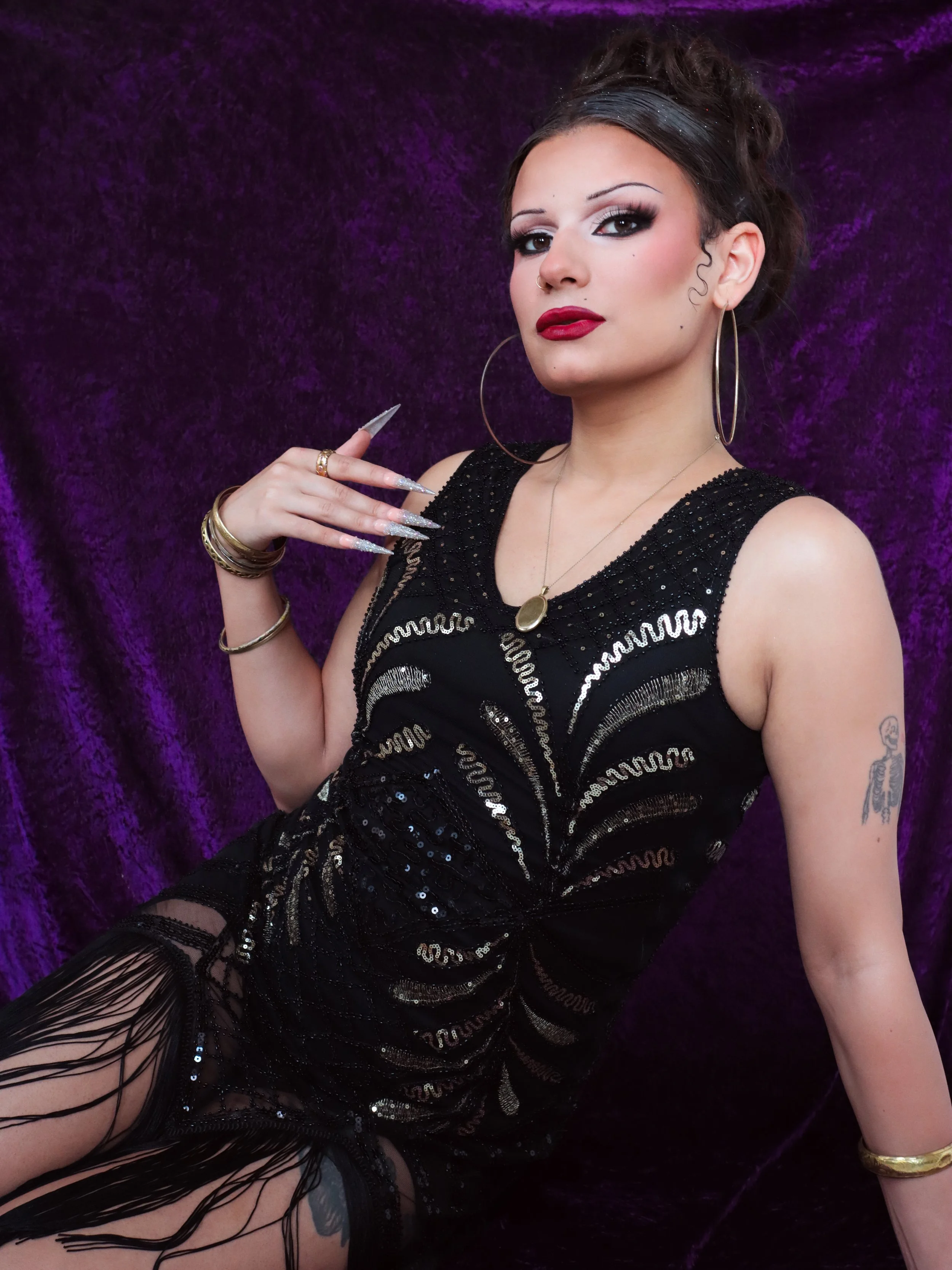
Promo photo by ©kelmihelmi for the performance in the Finnish National Opera as Carmen
QM: The performance landscape is beautifully diverse, yet spaces can still feel divided. What does it mean to you to proudly bring your Finnish-Romani heritage into the heart of the alternative queer scene, and do you feel a sense of responsibility on your shoulders?
ROSETA: Yes, I’ve been thinking about this for a while. It’s a larger topic, but I often feel like I’m living in my own shadow. I recognize myself as Roseta La León 100% of the time—not just during a show, on TV, or in a movie. At the same time, there is a duality between having a regular personal life and having a public, artistic life.
Sometimes it’s really hard to accept the idea that I might be an inspiration to someone else; it just feels strange to me. Just two days ago, I was talking with Virpi Xclusive Lanvin—a pioneering dance teacher, producer, and "Queen Mother" in the Finnish and Nordic ballroom scene. She looked me in the eyes and said, "You’re so young, yet you are an inspiration to so many people, and I don’t think you even realize how many people look up to you." When someone says that, my instinct is to shy away and say, "No, stop!"—which I think is good because it keeps me humble.
Honestly, I am deeply honored to represent my identity and break glass ceilings, like we did at the Finnish National Opera. At the end of the day, whether people look up to me isn't really up to me to decide; it just happens, and I have to go with the flow. I’m grateful beyond words, even if navigating that duality is a never-ending mind game. During the opera premiere, I felt immense pressure because it was such a massive stage. I eventually had to sit myself down and strip all that external pressure away because it was taking the fun out of it. I realized the only way I’m going to do well is if I’m actually enjoying what I’m doing, rather than worrying about how people will receive it.
QM: We can also see strong influences from Latin culture, music, and icons like Selena Quintanilla and La Veneno in your artistry. Where does that connection come from?
ROSETA: (Laughs) Have you ever seen me perform Selena Quintanilla? That actually comes from a funny inside joke. I’m very close with Friday the Professor, and she has always called me the "resident Latina," even though I’m not Latina.
However, I do have a deep love and appreciation for Latin culture. Aside from the fact that I kind of look like Selena—which makes channeling her easy—I draw a lot of inspiration from Latin artists. There are actually many musical and cultural similarities between Latin culture and Romani culture. Because I recognize those shared elements from my own background, it feels very natural for me to jump into both worlds.
QM: Starring as Carmen in Love is a Rebellious Bird at the Finnish National Opera was a major milestone. Was it a difficult project to be part of, and what did sharing that piece mean to you personally?
ROSETA: It wasn’t necessarily difficult, though I didn’t fully grasp how monumental the piece actually was—or how many glass ceilings it would break—until the very end.
The story started in September when Carmen Baltzar asked me to be part of the project. She didn't even tell me which stage it was on at first, and I immediately said yes because we had wanted to work together for years. Then I met with Sara Melleri, and we began shaping the concept. We started actual training in January, and it was an immense amount of work.
Working inside an institution like the National Opera was fascinating, though it came with its challenges. My piece was only 20 minutes long, yet it went through so many changes—the structure changed twice, and the set design changed completely just one week before the premiere. To be honest, the opera house is a very traditional, very "white" institution. The goal of the Sugar Factory project was to push the boundaries of opera, yet the institution itself sometimes struggles to break its own limits. Once we found our path, though, things flowed smoothly.
I wanted to bring a lot of myself and my Romani culture into the performance. During that process, it hit me: Carmen has been around for centuries, yet here we are in 2026, and I am likely the first Romani woman to play a version of this Romani character in a major national opera house. Realizing that was a very surreal moment.
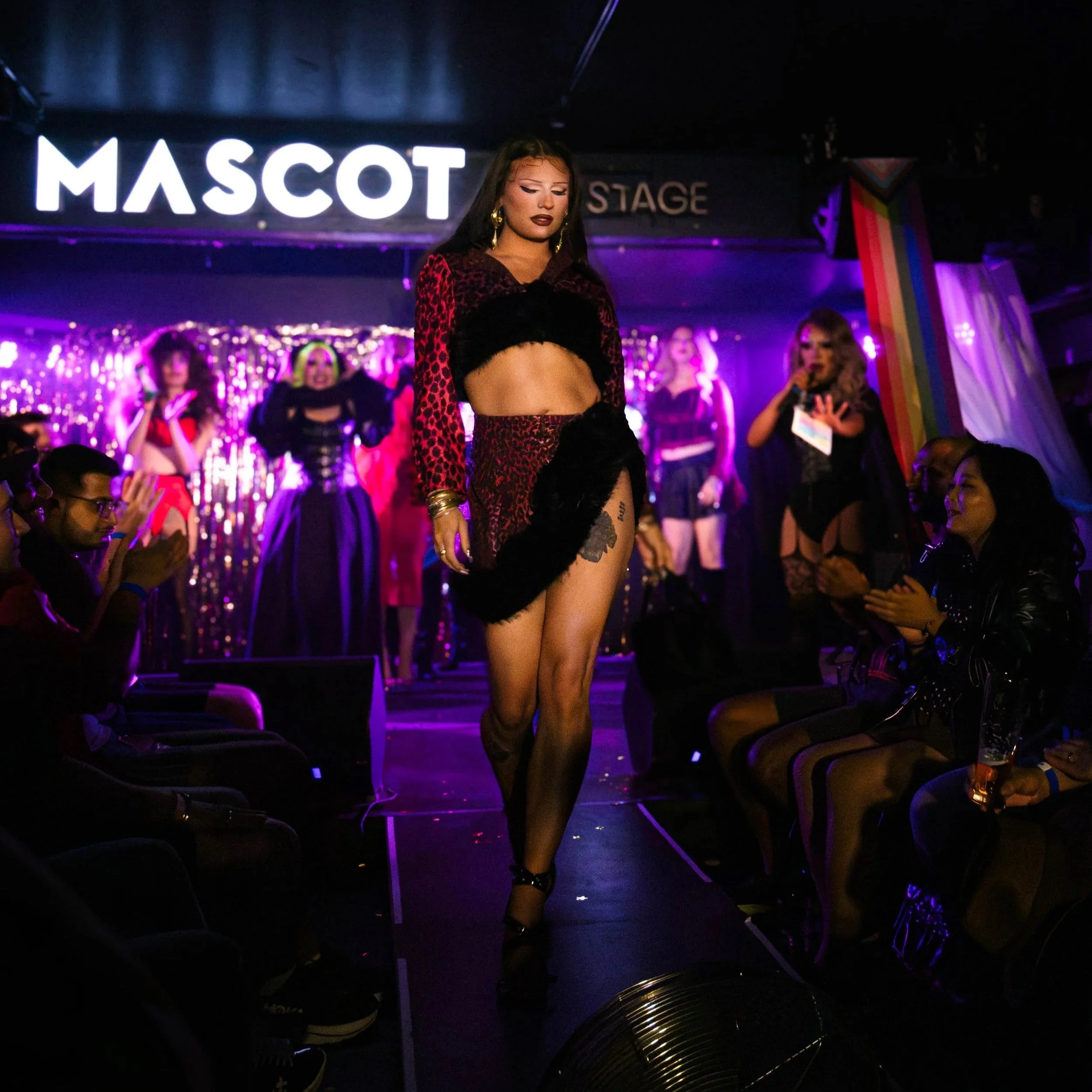
QM: When did you first discover that you wanted to be a singer and performer?
ROSETA: I have been performing on stage regularly since I was 11 years old. I started in theater acting, and the second play I ever performed in was actually one I wrote myself—so I was a playwright once upon a time! I did theater almost full-time from ages 11 to 19. After that, I took a break for school and regular work life before returning to the stage as myself, as a showgirl. Recently, I’ve been getting back into acting alongside the opera, and my first-ever movie is coming out soon.
QM: Tell us more about that upcoming movie!
ROSETA: As far as I know, the Finnish premiere is set for February 2027. I can’t say too much yet, and while I don’t have a big role, it was a monumental experience for me. The film covers a topic that hasn't been addressed in this way before and is very significant for Finnish queer history. Plus, some friends from the drag scene are acting in it alongside me.
QM: From the high energy of AFRONTE and the Helsinki Drag Marathon to the grandeur of the National Opera, your artistic journey is already immense. Looking ahead, what is your ultimate vision for your career?
ROSETA: I really want to do everything. I don’t limit myself to just one label—I’m a true showgirl, and I do whatever I set my mind to. In the future, I definitely want to continue acting and do a lot more film work. I’m also very passionate about writing and am currently working on my first book, which I hope to publish as soon as possible.
Right now, though, my main focus is music. I am laser-focused on creating my own original music and learning everything I can about the process. I’m really excited to have something concrete ready to release next year.
QM: While anti-trans and anti-drag rhetoric is rising globally, local debates sometimes criticize Pride events for supposedly "over-sexualizing" culture. What is your response to those trying to restrict or mischaracterize these art forms?
ROSETA: There are so many layers to this because we are really talking about several different issues. First, regarding Pride being sexual: sexuality is a major part of the rebellion. Pride is a riot—and honestly, in my opinion, it isn't even radical enough right now. Of course, when it comes to explicit themes, there is a time and a place, and it is every adult's responsibility to recognize that context. However, showcasing different forms of sexuality and intimacy is an essential part of Pride. Society pushes a very rigid, heteronormative idea of intimacy, and it’s important to wake people up to the fact that human connection exists in many beautiful ways.
Second, when right-wing figures and anti-Pride politicians complain about "over-sexualization," they aren't actually talking about sexuality. Their arguments don't come from real knowledge; they come from a desire to paint a false narrative about marginalized groups without ever trying to understand them.
Anti-trans, anti-drag, and anti-Pride rhetoric all come from the exact same place of ignorance. They weaponize topics like children, mental illness, or absurd debates like the bathroom panic in the U.S. Media—none of which are based in reality. For the record, I would feel completely comfortable bringing a child to a child-friendly drag show, because context matters and not all drag is meant for adults. Ultimately, these attacks aren't based on actual events; they are just fear-mongering.
QM: Do you consider yourself an activist?
ROSETA: Strictly speaking, no. I’ve spoken up a few times—usually by posting a fierce photo with a long caption calling people out—and that’s my personal style of speaking up. If I feel the need to say something, I have no problem opening my mouth, but I generally leave formal activism to people who have the drive and passion to articulate those issues better. I have immense respect for full-time activists.
At the same time, simply living your life authentically and honestly is a form of activism in itself. When I walk down the street, I’m just walking my own runway. Some people might judge, and some people might give me tens, and neither really matters. Just being myself, wearing what I want, and walking in 10-inch heels wakes people up. Finnish culture often expects people to be extremely modest, reserved, and to keep themselves small. When you are loud and bold, you disrupt that comfortable little bubble people live in—and for some people, that disruption is scary.
QM: You radiate so much confidence. Where does that come from?
ROSETA: Living authentically, being honest, and having a fat ass.
QM: Finally, I always ask this final question because it is deeply important to Queerland Media: What would you say to a young person reading this interview who feels lonely, lost, or scared to be themselves?
ROSETA: The first thing that comes to mind is my mom. We have a wonderful relationship, and because she had me very young, we are less than 20 years apart. In a way, we grew up into adulthood together. It made me realize that we never really stop growing or changing—you never want to be the exact same person you were five years ago—and it is truly a privilege for a parent to get to grow up alongside their child.
That is what I want queer kids who feel alone or rejected by their families to internalize: it is a privilege to grow up with you.
Queer people—especially trans people and drag artists—are like cockroaches; we will survive anything. We hear so many stories about young people being abandoned or disowned by their families. Those people pick themselves up, go out into the world, and build a new chosen family with others who have been left alone, and they get to grow up together.
As long as you keep moving forward, you never truly lose anything. The people who abandon, abuse, or reject you are the ones who lose, because they have failed. As queer people, we find our community, we create our own families, and we reclaim what belongs to us. We don't lose—we only grow stronger.
QM: Thanks Roseta
Be loud Be proud be You
Today’s political climate surrounding LGBTQ+ rights can feel exhausting and hostile. Still, pushback against our community did not begin yesterday, nor did it start with Donald Trump. For generations, LGBTQ+ people have faced discrimination and efforts to erase us.
Every artist who takes the stage, every voice that challenges stereotypes, and every person who chooses to live authentically contributes to something larger. Sometimes visibility is a protest. Sometimes it is a quiet conversation. And sometimes, it is walking confidently through the streets of Helsinki in spectacular heels.
Being yourself is not an act of rebellion. It is your right.
That is what stayed with me most after meeting Roseta La León. She needed neither a spotlight nor an audience to leave a mark. She simply showed up as herself—and sometimes, that is more than enough.
— Raul Medina, Editor-in-Chief, Queerland Media
Have a story to share?
We want to hear from you! If you have a story, an idea or something important to share with our LGBTQ+ community, get in touch with our editorial team. Your message will be treated confidentially.
Write to us at hello@queerlandmedia.com.
We read every message, although we may not be able to reply personally to everyone.
