
Texas Tried to Ban Drag. A Federal Judge Said: “Then Don’t Go.”
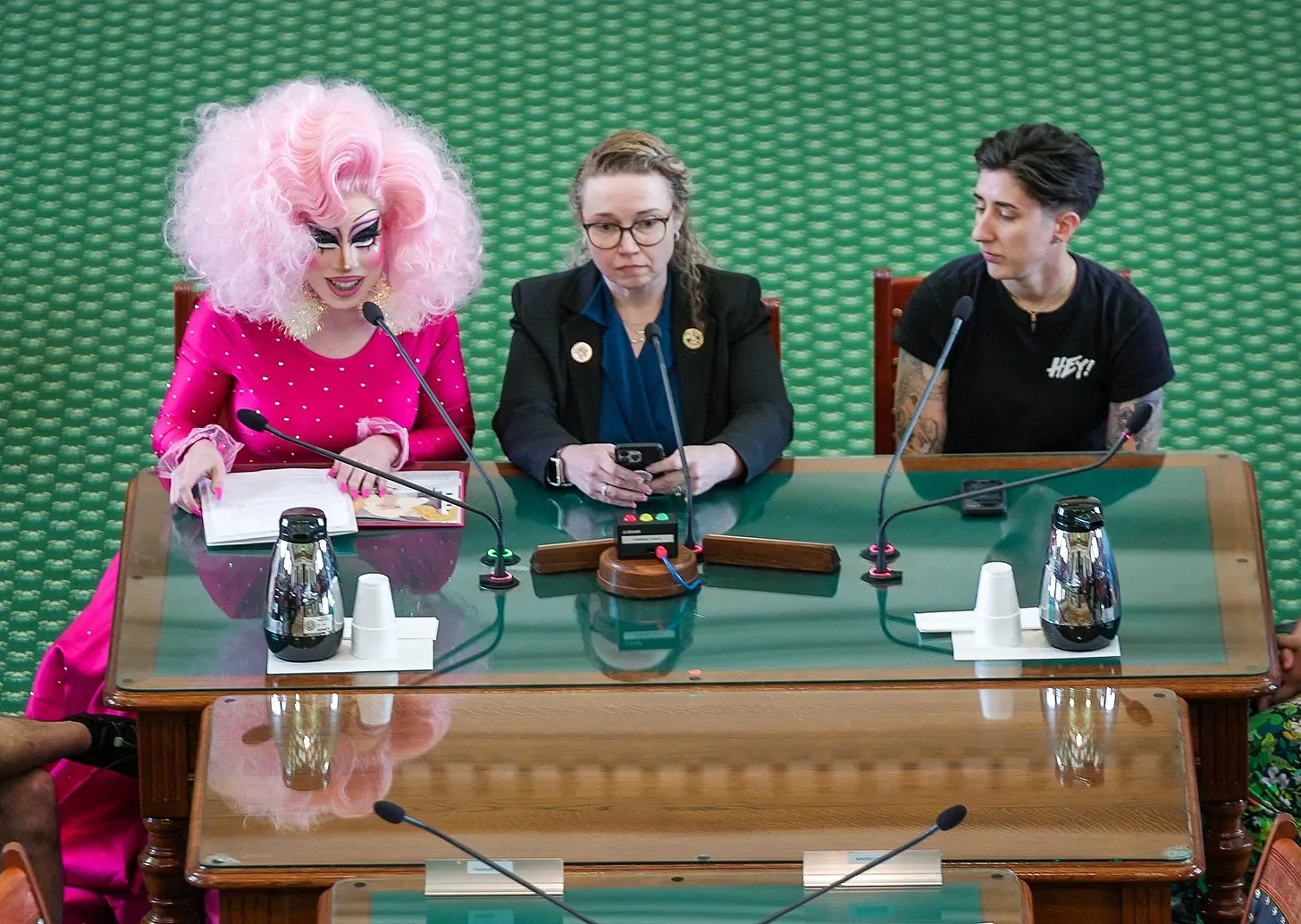
Bandit testifying in front of the Texas senate in opposition to anti-drag bills. Via The Austin-American Statesman.
A major victory for drag artists, free expression, and LGBTQ+ visibility in the United States
In a significant win for LGBTQ+ rights advocates and performers across the country, a federal judge has once again struck down Texas' controversial law targeting drag performances.
The ruling reinforces a principle at the heart of American democracy: freedom of expression cannot be restricted simply because some people disagree with the message.
Judge David Hittner of the Southern District of Texas ruled that Senate Bill 12 (SB 12) violates constitutional protections under the First Amendment, concluding that the law was overly broad, vague, and incompatible with free speech rights.
“The answer is simple: don’t attend.”
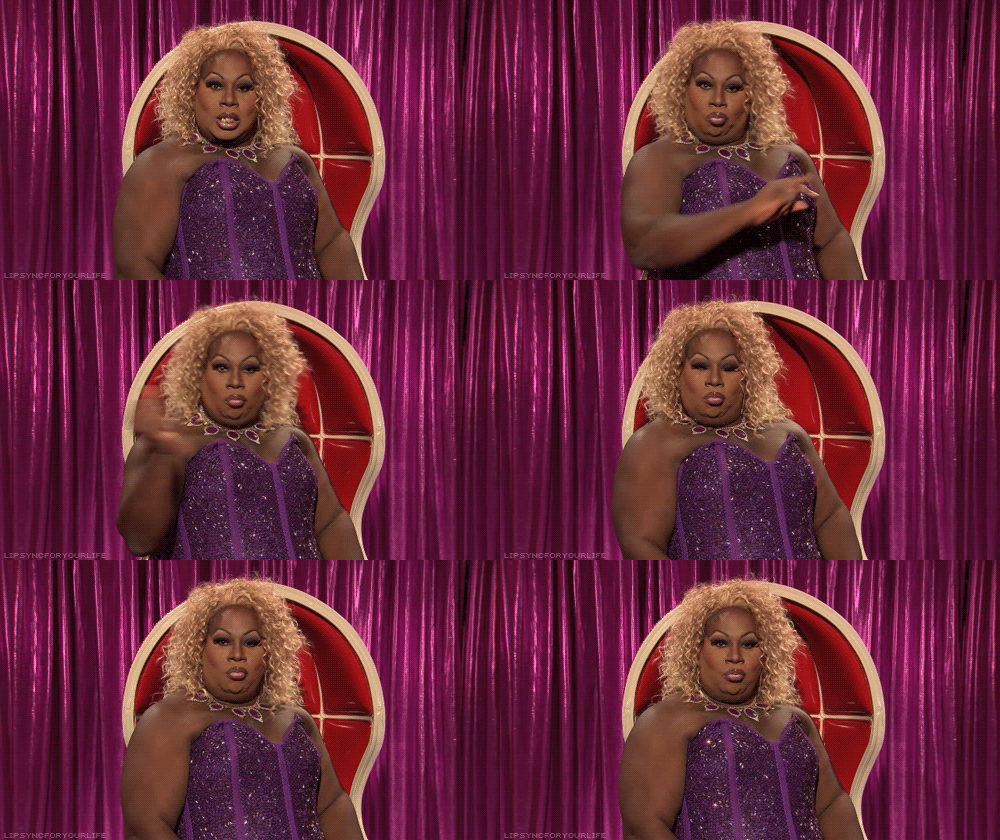
One of the most talked-about moments from the ruling came from the judge’s direct response to critics of drag performances.
“For those who find these performances offensive, the solution is relatively simple: simply don’t go.”
The statement quickly resonated across social media, where LGBTQ+ advocates praised the court for reaffirming that personal discomfort is not a legal justification for censorship.
A law that put drag artists at risk
The legislation, approved in 2023, sought to penalize venues that hosted performances deemed "sexually oriented" when minors were present.
Businesses could have faced fines of up to $10,000, while performers risked criminal penalties, including potential jail time.
Although the final text of the law never explicitly mentioned drag shows, its political supporters repeatedly promoted it as a measure designed to restrict drag performances in public spaces.
Civil rights organizations argued from the beginning that the law was crafted to target LGBTQ+ expression while creating uncertainty for artists, venues, and cultural events across Texas.
Why the court found the law unconstitutional
Judge Hittner determined that the legislation's language was so broad that it could potentially apply to many forms of mainstream entertainment.
To illustrate the problem, the ruling referenced cultural icons such as Dolly Parton and Elvis Presley, noting that the law's vague standards could lead to absurd interpretations about what qualifies as inappropriate performance art.
The court ultimately concluded that artistic expression cannot be selectively restricted based on subjective interpretations of morality or taste.
LGBTQ+ organizations celebrate the decision
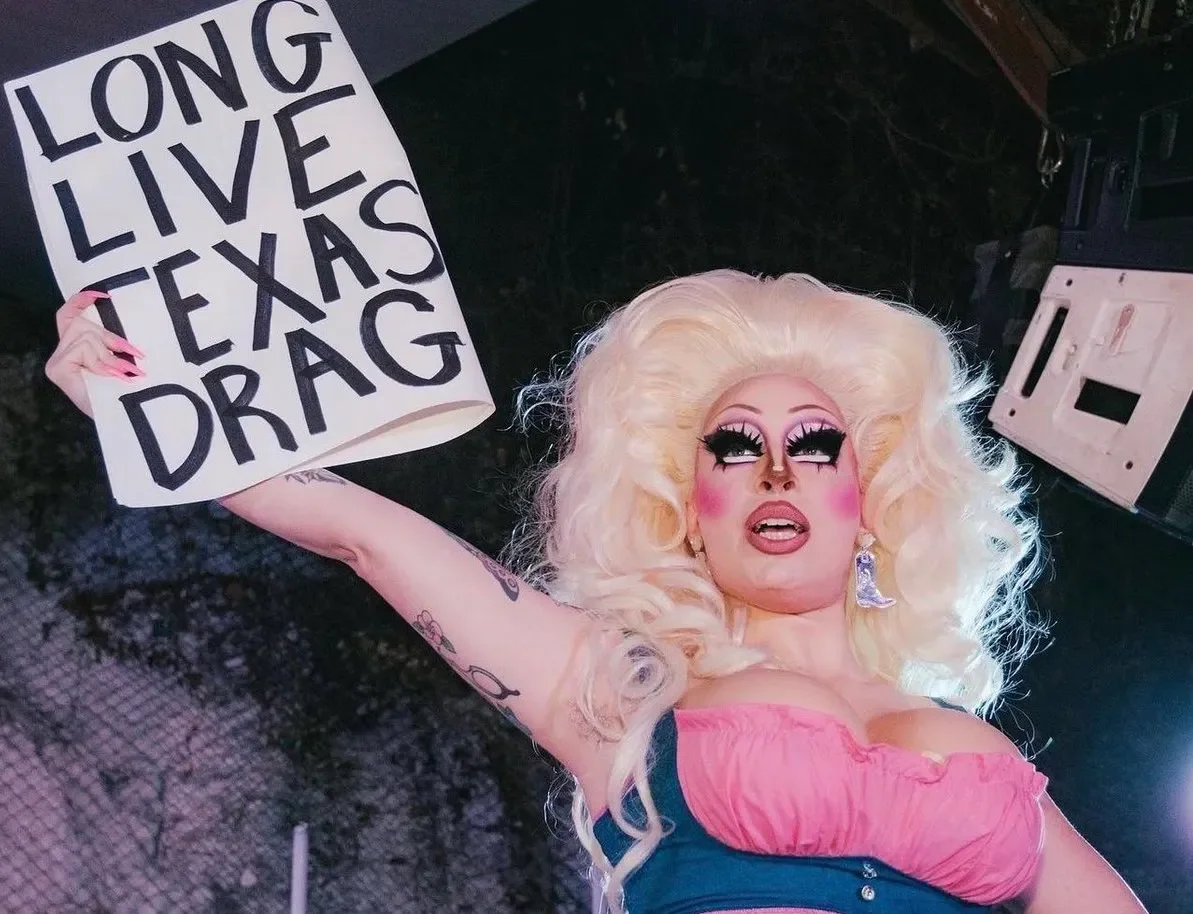
Brigitte Bandit performing at Cheer Up Charlie’s in Austin, Texas. Via Instagram.
Advocacy groups, legal organizations, and drag performers involved in the lawsuit welcomed the ruling as a landmark victory.
Among those celebrating was performer Brigitte Bandit, who described drag as a powerful tool for liberation, joy, community, and self-expression.
For many LGBTQ+ Texans, the decision represents more than a legal victory—it is a reminder that queer culture continues to withstand growing political attacks.
Advocates argue that drag is not merely entertainment. It is a form of storytelling, resistance, creativity, and visibility that has long played a central role in LGBTQ+ history.
The broader battle over LGBTQ+ rights in America
The decision arrives amid an ongoing wave of legislation affecting LGBTQ+ communities across the United States.
Civil rights organizations have tracked hundreds of bills introduced in recent years that seek to restrict LGBTQ+ rights, with many focused on transgender people, education, healthcare, and public expression.
At the same time, public attitudes toward LGBTQ+ people reveal a more complex picture. Support for same-sex marriage remains significantly higher than it was decades ago, reflecting enormous progress made through decades of activism and visibility. Yet recent surveys indicate that support has softened slightly compared to recent peak levels, raising concerns among equality advocates about growing political polarization and anti-LGBTQ+ rhetoric.
Many activists warn that attacks on LGBTQ+ communities in the United States can have consequences beyond its borders, influencing public discourse and political movements internationally.
Why this ruling matters
The Texas decision is about far more than drag performances.
It is about whether governments can decide which forms of art, identity, and expression deserve protection—and which do not.
For LGBTQ+ communities, the ruling sends a clear message: constitutional rights extend to queer voices, queer art, and queer visibility.
As legal challenges continue across the country, this decision stands as an important reminder that freedom of expression remains a cornerstone of democratic societies.
What happens next?
Texas Attorney General Ken Paxton has already announced plans to appeal the ruling, meaning the legal battle is not over.
However, for now, LGBTQ+ advocates, performers, and civil rights organizations are celebrating a decision that reinforces the idea that drag is art—and that art deserves protection.
The case is likely to remain a key reference point in the ongoing national conversation about free speech, LGBTQ+ visibility, and the future of queer rights in America.
Stay Connected With Queerland Media
Have a Story We Should Cover? Are you aware of an LGBTQ+ story, community initiative, representation milestone, or news event that deserves visibility?
We would love to hear from you. Contact the Queerland Media editorial team confidentially at:
hello@queerlandmedia.com
Every message is read by our team. While we may not be able to respond individually to every submission, your story could help amplify voices and experiences that deserve to be seen, heard, and celebrated.
