
A Historic Win. A Critical Moment for LGBTQ+ Rights
© Tobias Schwarz/AFP/Getty Images
Germany’s political landscape is undergoing a significant transformation, and many LGBTQ+ communities across Europe are watching closely.
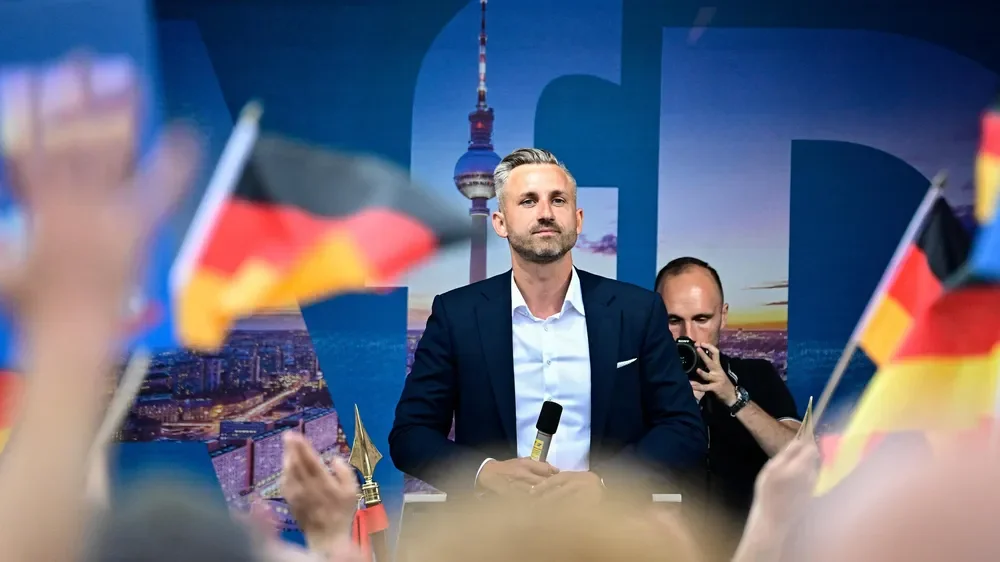
The far-right Alternative for Germany (AfD) has secured its strongest regional election result to date, winning 43.8% of the vote in Saxony-Anhalt. While the party did not achieve an outright majority, the result represents a historic milestone for a political movement that has steadily expanded its influence over the past decade.
For many observers, the election is about more than a regional victory. It reflects a broader trend unfolding across Europe, where nationalist, anti-immigration and socially conservative parties continue gaining support amid economic uncertainty, concerns over migration, rising living costs and growing political polarization.
The AfD has built much of its platform around stricter immigration policies, stronger border controls and what it describes as the protection of traditional German values. Critics argue that many of the party’s proposals could disproportionately affect migrant communities and contribute to a political climate that feels increasingly hostile toward diversity and inclusion.
The conversation becomes even more complex when it comes to LGBTQ+ rights.
Although Germany remains one of Europe’s most progressive countries regarding legal protections for LGBTQ+ people, AfD leaders have repeatedly criticized same-sex marriage, gender-inclusive policies and what they call “gender ideology.” The party promotes a traditional definition of family centered on heterosexual marriage and has frequently positioned itself against policies supported by LGBTQ+ advocacy organizations.
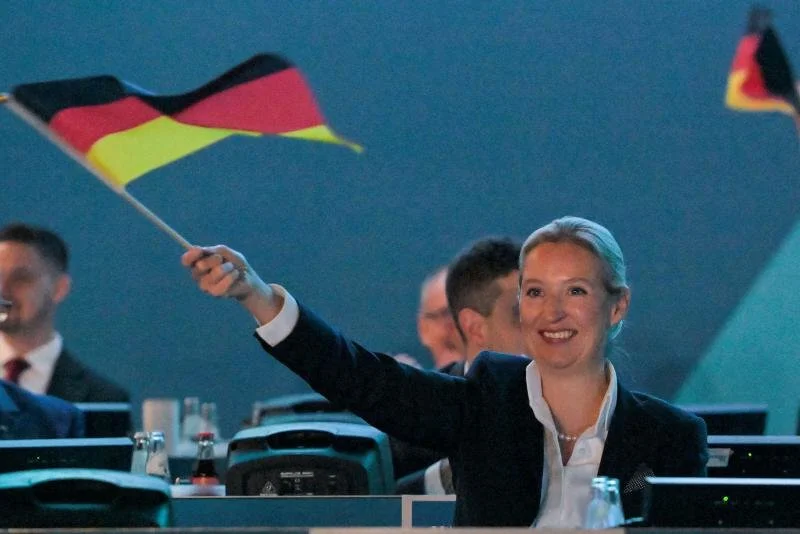
At the center of public discussion is AfD co-leader Alice Weidel, one of the most recognizable figures in German politics. Her personal life has attracted international attention because she is openly lesbian, lives with her long-term partner Sarah Bossard and together they are raising two children.
REUTERS
For critics, this has created an apparent contradiction between the party’s political messaging and the personal reality of one of its most prominent leaders. Weidel supports civil partnerships but opposes the legal concept of same-sex marriage, arguing that marriage should remain linked to a traditional understanding of family. She has also rejected being associated with queer political movements despite being one of the highest-profile LGBTQ+ politicians in Europe.
The debate surrounding Weidel highlights a broader reality within contemporary politics: LGBTQ+ representation does not always translate into support for LGBTQ+ policies. Political identity, ideology and personal identity often intersect in ways that challenge conventional assumptions.
Germany is not alone in experiencing this political shift.
Across Europe, several right-wing and nationalist parties have expanded their influence in recent years. In Finland, European Parliament member Sebastian Tynkkynen has become one of the most visible voices within the Finns Party, a populist and nationalist movement that has advocated stricter immigration policies and conservative social values. Similar political trends can also be seen in countries such as Italy, France, the Netherlands, Austria and Sweden, where debates about immigration, national identity and cultural change continue to dominate political conversations.
For LGBTQ+ communities, the rise of these movements does not necessarily mean an immediate rollback of rights. However, many advocacy groups and political analysts argue that shifts in political rhetoric can influence public attitudes, legislative priorities and the broader social environment in which minority communities live.
The significance of AfD’s victory extends beyond Germany’s borders. As Europe prepares for future elections and political realignments, the growing popularity of nationalist and far-right parties is becoming one of the defining stories of the continent’s political future.
For LGBTQ+ people, immigrants and other minority communities, the question is no longer whether these movements are gaining influence. The question increasingly being asked is how that influence could shape the next chapter of Europe’s democracy, human rights landscape and social cohesion.
One thing is clear: the political center of gravity in Europe is shifting, and the effects of that shift are being felt far beyond the ballot box.
