
Welcum To My Church: Peter Juhan, Queer Desire, and the Art of Radical Freedom
By Raúl Medina
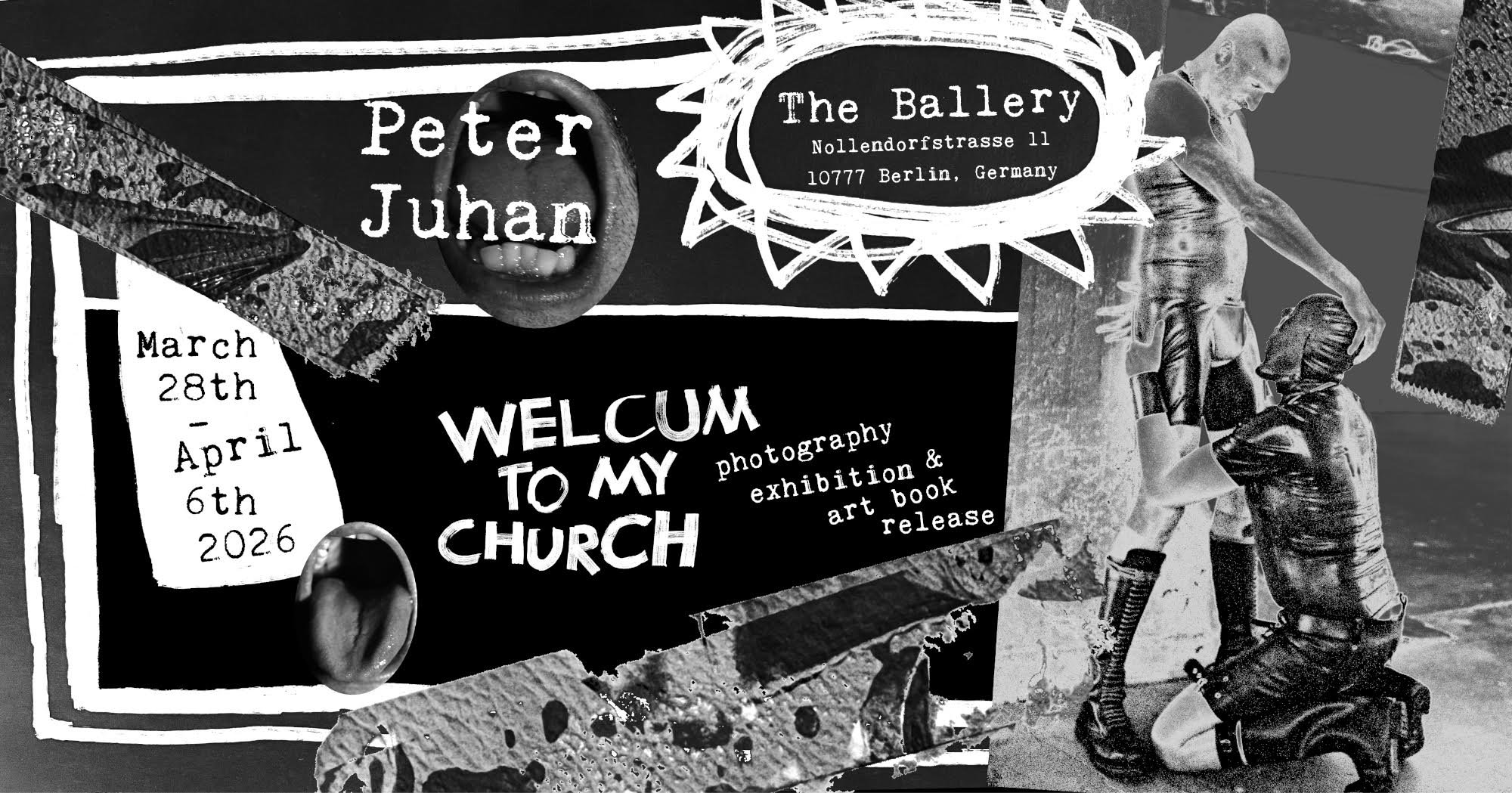
Finnish queer artist Peter Juhan brings his boldest work yet to Berlin — during Easter Berlin Leather Week.
©peterJuhan
From Helsinki to Berlin: A Queer Force You Can’t Ignore
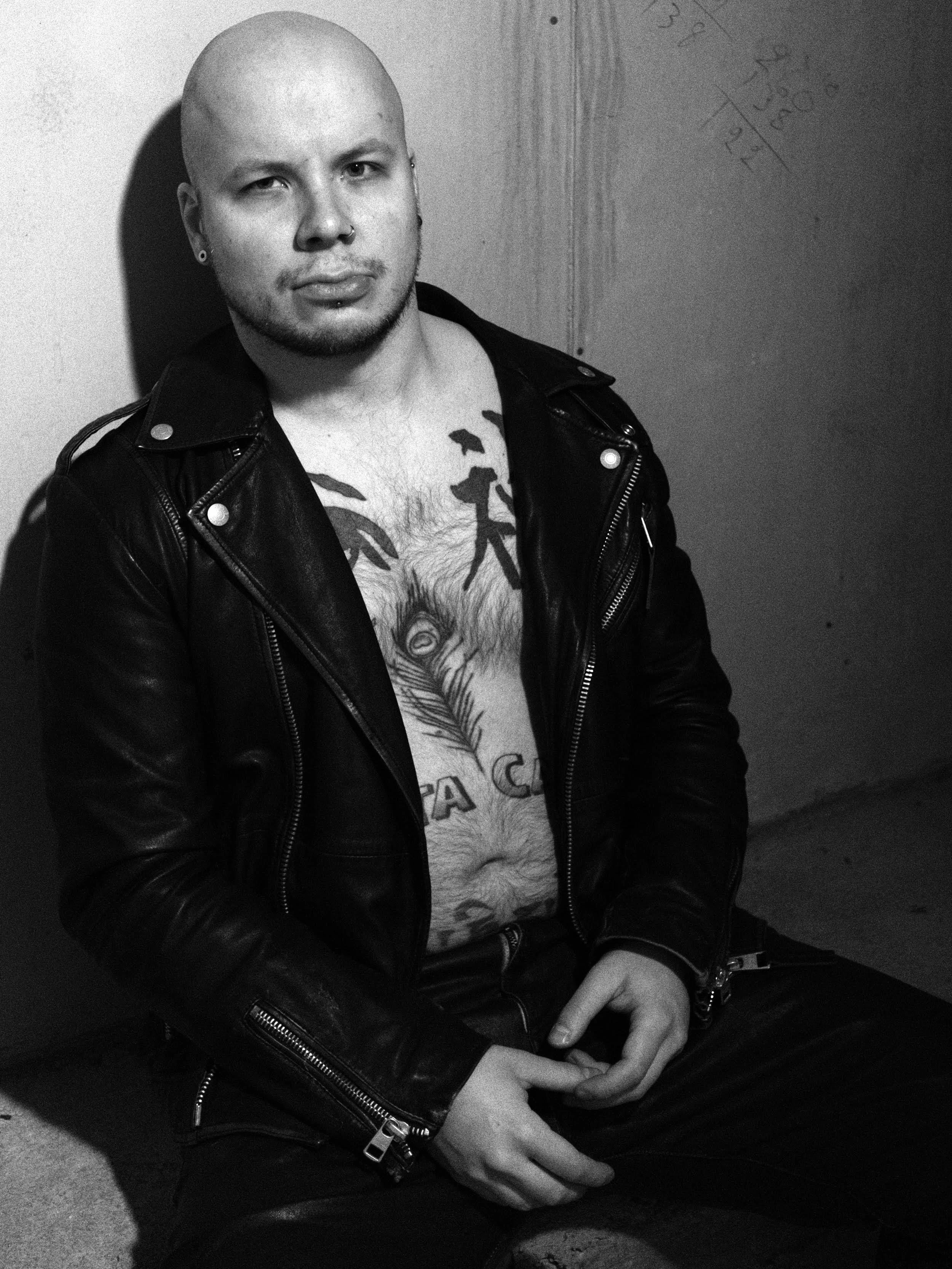
Since 2018, Peter Juhan has been quietly — and sometimes very loudly — reshaping Finland’s LGBTQ+ cultural landscape. Photographer, DJ, musician, and event organizer, Juhan doesn’t just document queer life; he amplifies it, exposes it, and refuses to make it palatable.
Known for his raw black-and-white photography, Peter’s work explores BDSM, masculinity, fetish culture, male bodies, and queer desire without apology. His images are explicit, humorous, confrontational, and deeply human. They don’t ask for permission — and that’s exactly the point.
©PeterJuhan
At just 34, Juhan has already presented three solo exhibitions in Finland, gained national media attention, and experienced censorship firsthand when parts of his work were taken down for being “unsuitable.” Instead of slowing him down, it sharpened his vision.
“When things like that happen, you know you’ve done something meaningful.”
His work has traveled far beyond Finland — collected in Germany, the UK, Denmark, the US, Australia, and Japan — and exhibited in Berlin during Folsom Europe and Easter Berlin Leather Week. Now, Berlin becomes the stage for his most complete and unapologetic statement yet.
Welcum To My Church: Art, Fetish, and a Queer Gospel
Berlin Exhibition & Art Book Release
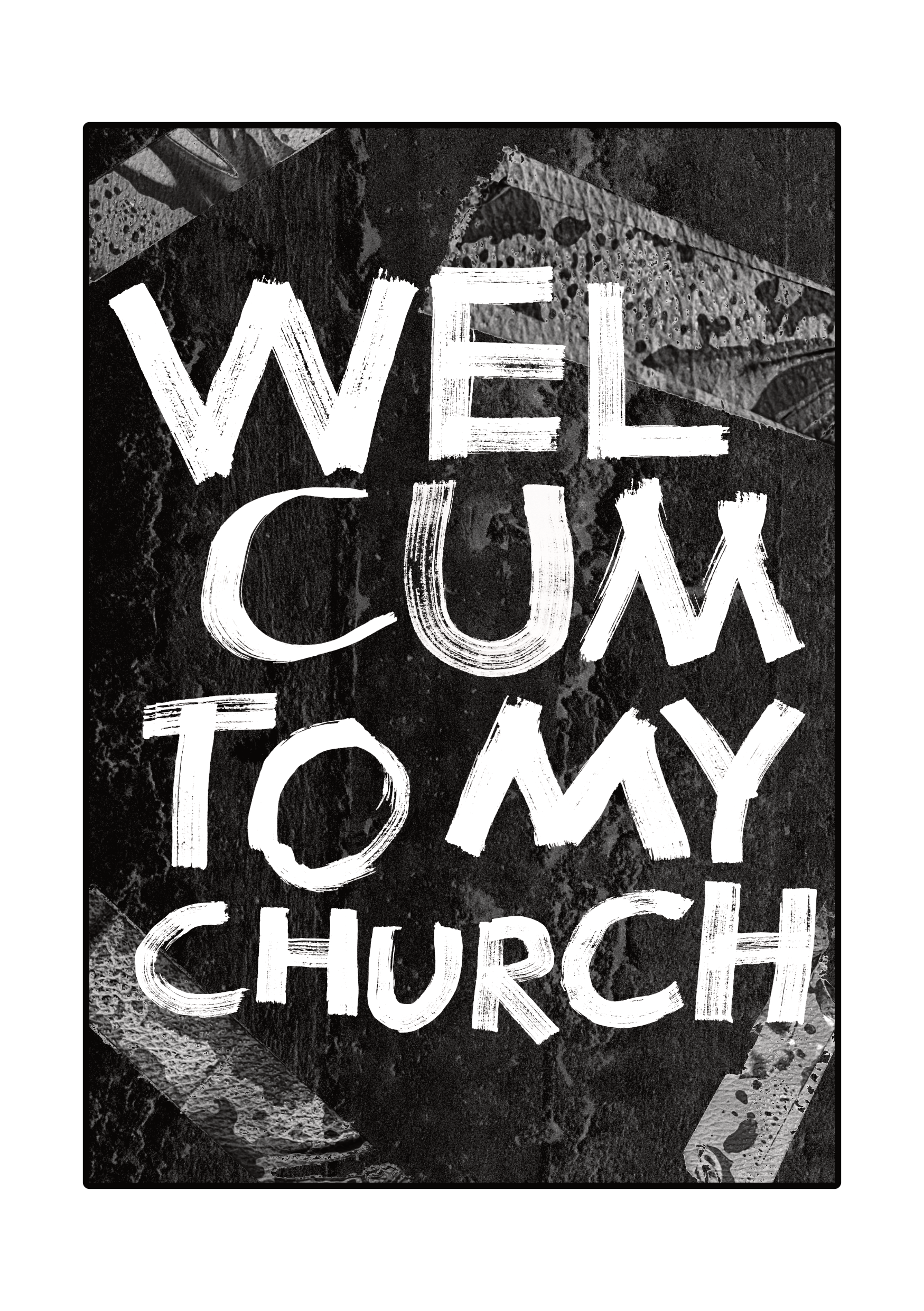
Welcum To My Church is not just an exhibition — it’s a declaration.
©PeterJuhan
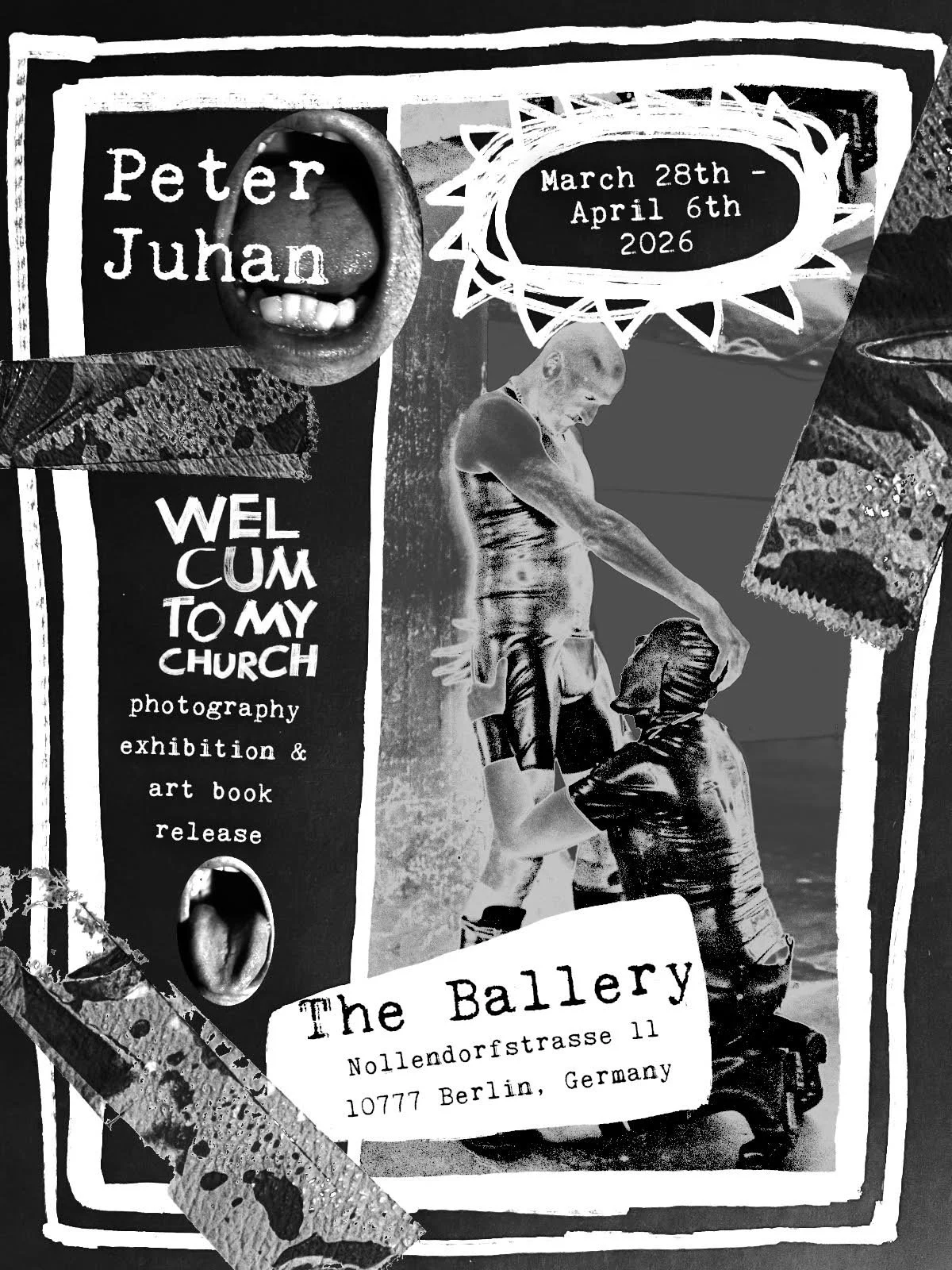
Filled with dark humor and explicit homoerotic imagery, this new project brings together Peter Juhan’s first three art shows, his most recognized works, and over 10 new pieces, alongside the long-awaited Welcum To My Church art book and exclusive merchandise.
The book itself is a scrapbook of queer consciousness: a mix of photography, interviews, political thoughts, desire, love, hatred, sex, and belief systems — all filtered through Juhan’s sharp, unapologetic lens.
Inspired visually by 90s grunge culture, underground gig posters, and vintage Finnish porn magazines like Jallu, Kalle, and Lollo, the book feels raw, handmade, and intentionally imperfect — a direct rejection of sanitized digital aesthetics.
“Analog aesthetics have more human in it: rough, unpolished and interesting.”
Exhibition Details
©PeterJuhan
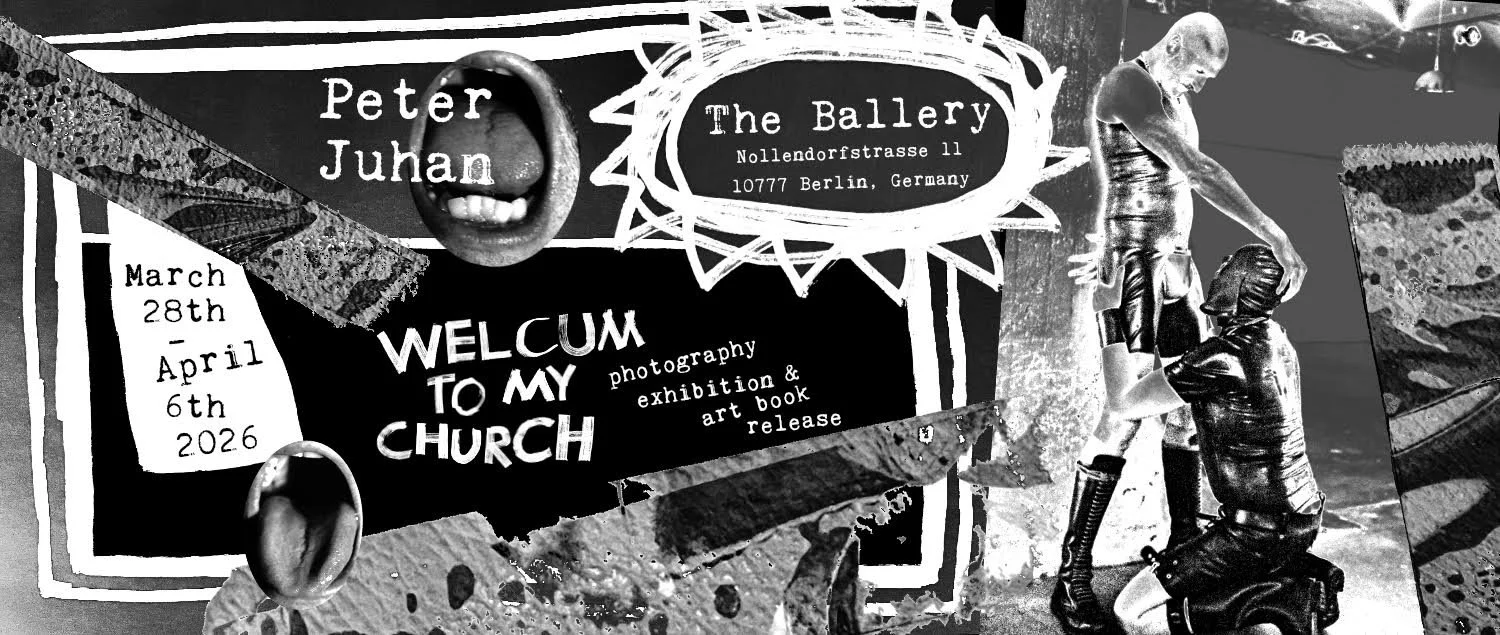
Title: Welcum To My Church
Artist: Peter Juhan
Location: The Ballery Gallery
Dates: March 28 – April 6, 2026
Opening: During Easter Berlin Leather Week
Curated & Hosted by: Peter Juhan
Daily Opening: Yes
Note: Peter Juhan’s first solo exhibition outside Finland
🔗 Art Book Pre-Order: peterjuhan.com/welcum
Exclusive Interview — Queerland Media x Peter Juhan
A raw, unfiltered conversation about fetish, censorship, queer power, and desire.
QM: The Berlin Leap
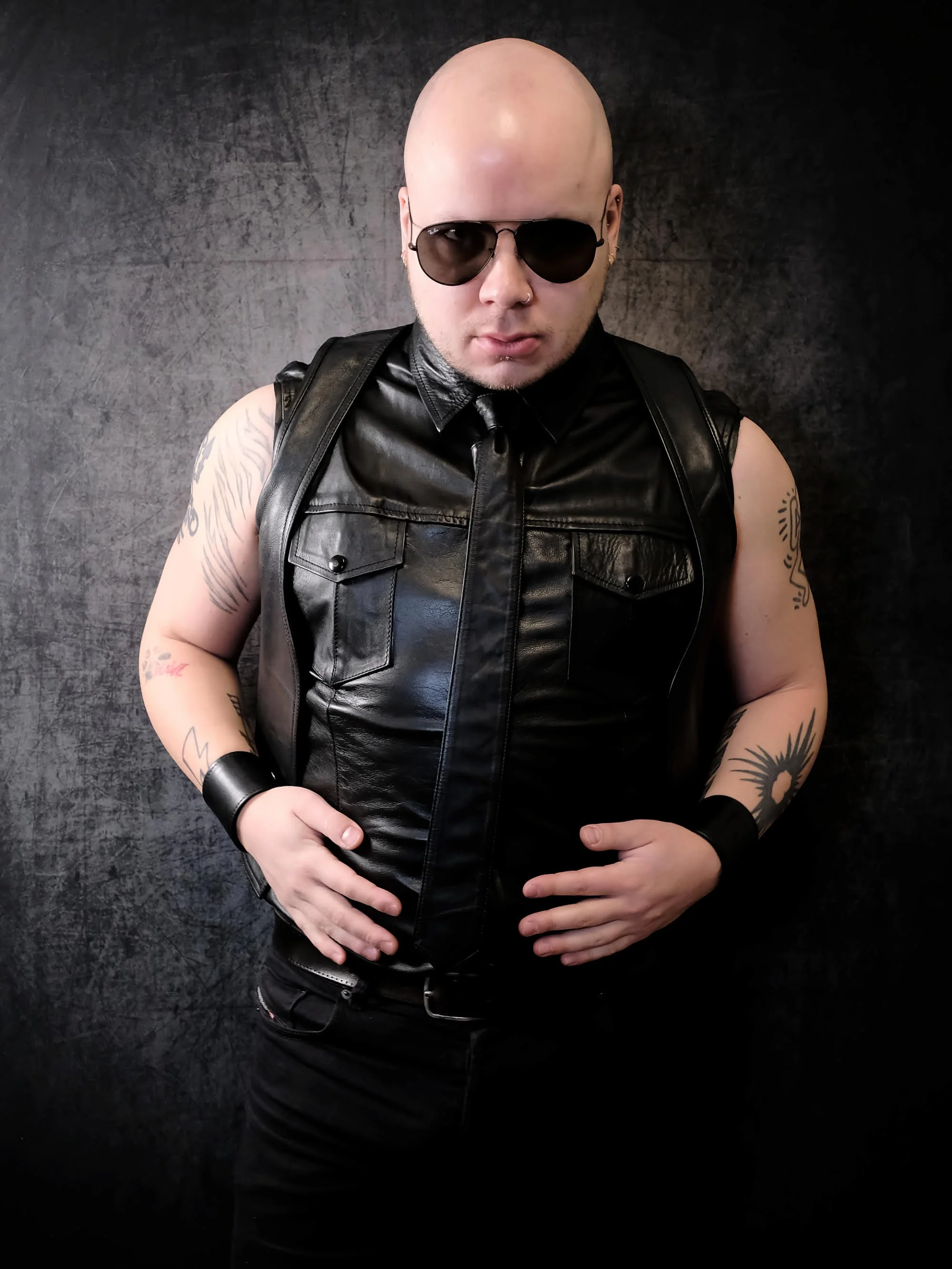
You’ve spent years shaking up the Finnish scene, but now you’re bringing Welcum To My Church to Berlin during Leather Week. Do you find that the Finnish audience’s reaction stems from a different place than the international crowd, or do desire and fetish speak a universal language that bypasses borders?
PJ: I think desire and fetish are completely universal. We are the same animals all around the world, but our cultures change, and so do our fetishes and sexual desires. For instance, French people compared to Japanese people: their main fetishes can be very different, based on culture, social structures, and of course, history. We have fewer than six million people here in tiny Finland, compared to Berlin, which has close to four million residents just in its capital area alone—so opportunities to explore your kinkiness are much more diverse.
©PeterJuhan
Audience reaction in Berlin was surprising for me. I took part in a group exhibition there two years ago, and the people who visited were of all ages, genders, and sexual orientations. One Latvian artist had these huge 2 x 2-meter photos of hardcore gay fisting on the wall, and there were two straight couples in their eighties (I’m assuming they were straight) looking very closely and really exploring the artworks. I felt they had zero reaction to the content itself—only engaging with the art and enjoying it.
QM: The Ero-Porn Divide
Your work intentionally pushes boundaries that make institutions nervous. In your view, is there a legitimate line between “erotic art” and “pornography,” or is that distinction simply a tool used by society to sanitize and domesticate queer creativity?
PJ: I think people can choose how they see things. Erotica is often considered more classy and tasteful, while pornographic art is more “in your face,” animalistic, and rough. Erotica teases; pornography shows. I call my own art “erotic” in the media only because it’s more approachable for people and galleries. But if someone calls my work pornographic—thank you, I totally agree. I don’t care what you call it, as long as you call it.
When it comes to queer art, some people struggle to find the right terms or to know what they are allowed to say about it. When there’s a painting of a woman and a man having sex, it’s just called erotic art. But when there are two men doing the same thing, it immediately gets labeled queer art, LGBTQ+ art, gay art—whatever. And once it’s called “queer art,” the word “pornography” appears very quickly. Erotica and pornography both represent the same thing: people enjoying themselves, being free and open, no matter who is depicted.
I will keep making my art the way I do now, as long as it is considered “wrong” by someone.
QM: The Weight of Censorship
Having had your work taken down by property workers for being “unsuitable,” how has the specter of censorship—or the refusal to self-censor—shaped your creative process? Do you create with the intent to provoke, or is provocation just an inevitable byproduct of your honesty?
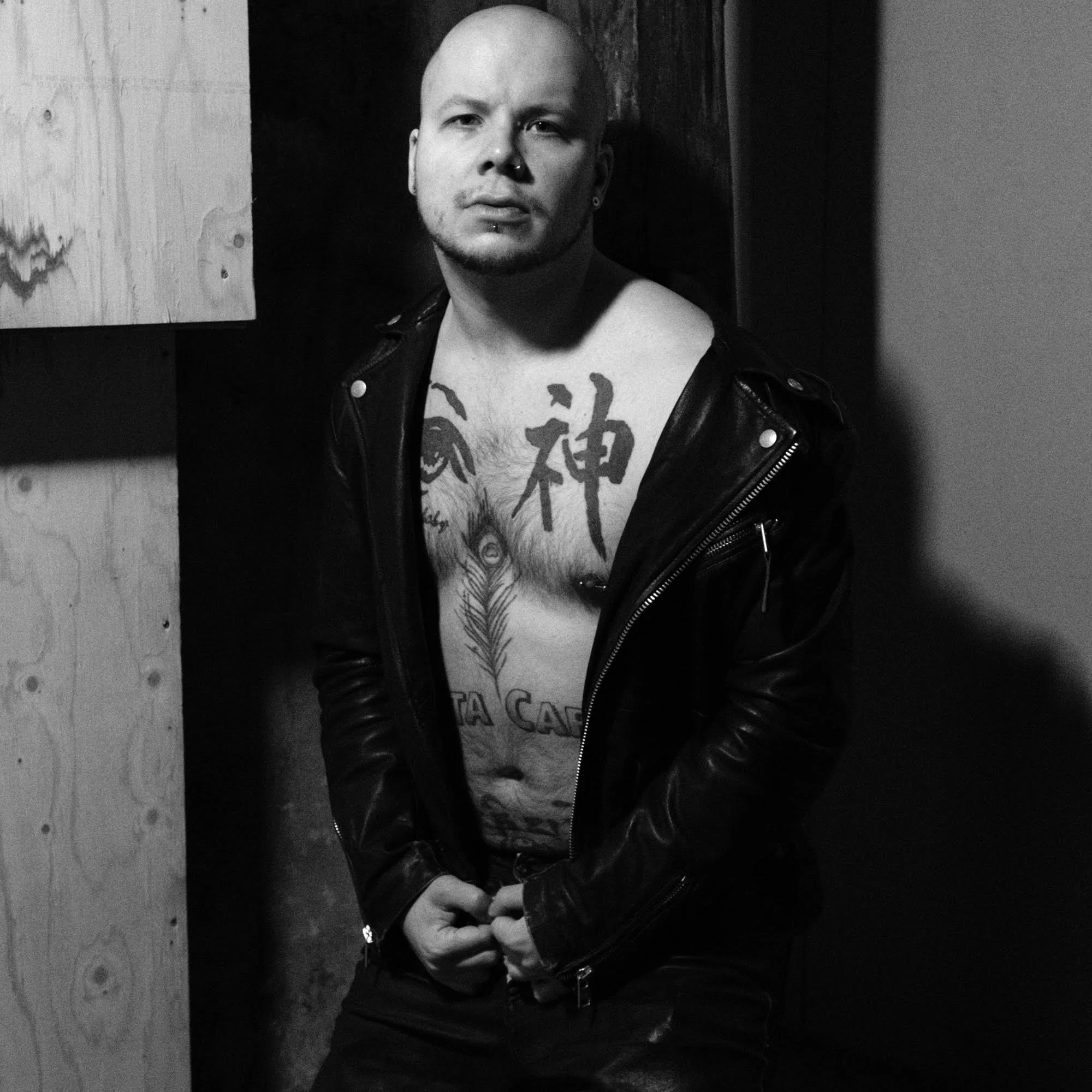
PJ: Yeah, that was an interesting case. I was living my life. Many people thought it paralyzed my creativity or that it was a “horrible experience,” but no—completely the opposite. When things like that happen, you know you’ve done something meaningful. Controversy is a good friend.
The only moment I felt uncomfortable was when my grandma (85 years old) called me and said she had read the articles and looked at my work. But in the end, she said, “I don’t understand all of it, but I’m still very proud of you.”
I’m so self-confident and open about my own sexuality and other people’s sexuality that sometimes I forget not everyone is living on the same level. Living in a “gay bubble” has its benefits. I think 90% of gay men can relate—I’m just transforming those ideas and needs into art. So yes, provocation might be a byproduct of my honesty and my gayness. Seeing latex masks on shirtless, hairy men in a public library can be shocking—not for children, but for uneducated, close-minded adults.
Peter Juhan-
“I do what I stand for 100% and what I believe is right. I would never make an exhibition about flowers or buildings—that’s not me. My inner pleasure lights up when I’m being judged and talked about.”
QM: Analog Rawness vs. Digital Perfection
The visual DNA of your new book draws heavily from 90s grunge and vintage Finnish porn magazines like Jalluand Kalle. What does that raw, analog aesthetic offer that is missing from the hyper-polished, filtered imagery of today’s digital gay culture?
PJ: I think hyper-polished and filtered imagery is disgusting. I just don’t get it. I understand when people edit their photos moderately—I do the same on Instagram sometimes: brightness, cropping, contrast, saturation, etc. But when it comes to art, I want to keep everything as real as possible. I like documenting the world as I see it: rough, unpolished, and interesting.
I love the 90s. I was born in 1991, so I didn’t experience much of it directly. But growing up, I fell in love with the grunge and rock culture of that decade—so pure, angsty, and empowering. Jagged Little Pill is the album of my life. Welcum To My Church uses very similar ways of editing imagery and text. Analog aesthetics feel more human—handcrafted and old-school. They also remind me of my childhood and my album collection.
These so-called “AI artists” don’t exist. They’re just a bunch of people lacking ideas and letting someone else do all the work while pretending they’re in charge. However they try to defend themselves, it doesn’t help. I would never pay a single euro to hang AI-generated art on my wall. That said, I’m a realist about how society evolves, so maybe—big maybe—in a few years, I might own one or two AI works. The world is versatile and constantly changing, and so am I. We have to accept that.
QM: The Gospel of the Church
Beyond the leather, BDSM, and explicit homoeroticism, what is the core “sermon” you are preaching in Welcum To My Church? What is the most important message hidden beneath the surface of these images?
PJ: The core sermon is: “Everybody wants to be us.” Gay, fetish, and queer lifestyles have so much of what the majority wants but can’t have—and they know it. We have a sense of pure freedom, understanding, and compassion. The main reason people can’t stand us or discriminate against us is jealousy. Forget God and the Bible—everybody wants to be us. Buy the book and enjoy!
QM: Humanizing the Fetish
By including the political and family insights of 28 diverse men, you’ve turned a photography book into a sociological scrapbook. How does our perception of a fetish image change when we are forced to confront the intellect and personal history of the person in the photo?
PJ: I wanted to include men with different backgrounds, sexual orientations, ages, and fetishes in my book. Some are photographed, some interviewed, and some both. Everything is mixed together like a scrapbook, and their comments, stories, and ideas are spread throughout the pages. The book is political, but also humorous and beautiful—so people don’t get stuck staring too long at photos of gaping assholes.
“My models are all fetishists, and my job is to document their behavior and bodies. ”
QM: Queer Identity in a Shifting World
Given the current global political climate, what does the “Queer Community” mean to you today? Are we still a radical sanctuary, or are we becoming too complacent in our search for mainstream acceptance?
PJ: The queer community has given me more than anything else in this world. We reflect one another and understand each other deeply. Especially in my twenties, I was lucky and privileged to meet and date older gay men who taught me so much and helped shape the person I am today. As I write in my book: “Every man deserves a gay friend, and every child deserves a gay parent.”
Every person in our community—gay, bi, trans, non-binary—has gone through an introspective process that straight people don’t usually have to face: Why do I like this person? Why do they hate me? Am I normal? What’s wrong with me? Why can’t I be like others? We need to appreciate that and understand that we are different. I don’t like it when people try to declare everyone “the same.” Straight people are different from queer people—and that’s fine. Let’s celebrate diversity as it is.
QM: To the Fearful Creative
There are young queer artists who are terrified of expressing their sexuality as boldly as you do. What is your “tough love” advice for someone who has the vision but lacks the courage to face the backlash?
PJ: Line up. Search for queer exhibitions, visit them, and talk to artists. Moving to a bigger city helps a lot—opportunities become much more accessible. Do what you want and don’t be afraid. When I sold my first artwork, it felt strange: Why does this person want to buy this? Is it too expensive? Am I good enough? Honey, you are already perfect—but remember, you can always evolve and become even better.
QM: Dark Humor as a Weapon
Your work is famously tinged with dark humor. Is this humor a protective armor for navigating critical social issues, or is it simply the only sane way to survive the showbiz world?
PJ: With humor—especially dark humor—you can make things more approachable and interesting. In showbiz, you take yourself seriously, but you also need to learn how to make fun of yourself and others. Nobody can be protected forever.
“Your job is to stand in front of people and sometimes take a lot of judgment and criticism. If you can’t handle that, maybe you should do something else.”
One thing RuPaul has said many times really sticks with me: become friends with your inner saboteur. Learn from it, don’t listen to it too much, and understand that it’s not reality.
QM: The Essence
If you had to distill the entire identity of Peter Juhan into a single word—no filters, no explanations—what would it be?
PJ: Stardust.
Why Welcum To My Church Matters — Right Now
©PeterJuhan
In a time when queer expression is once again being policed, sanitized, and repackaged for mainstream comfort, Peter Juhan refuses to soften the edges. His work doesn’t ask to be liked. It asks to be felt.
This is queer art that remembers where we come from — underground, sexual, political, joyful, defiant. It reminds us that desire is not shameful, fetish is not disposable, and queer bodies don’t exist to be made comfortable for others.
Join the Church
📍 Berlin, March 28 – April 6, 2026
📖 Pre-order the Welcum To My Church art book: peterjuhan.com/welcum
👉 Discover more queer stories, interviews, and radical voices at queerlandmedia.com
👉 Follow Queerland Media via our Instagram bio.site and stay connected to global LGBTQ+ culture.
This is not just an exhibition.
This is a reminder.
We are still here. And we are not quiet.
