
Two Women Make LGBTQ+ History in Bolivia
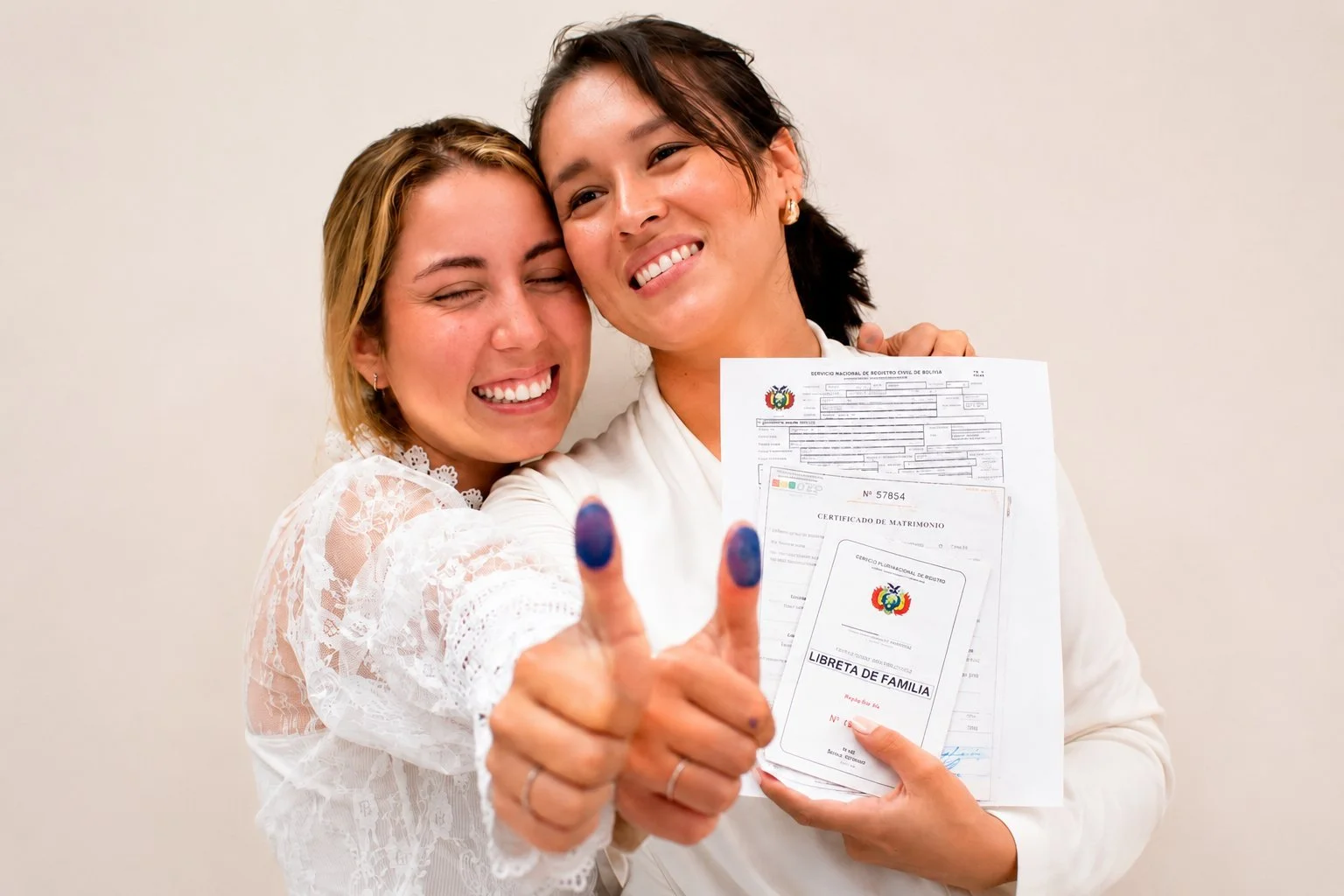
Fabiana Banzer & Scarlett Rocha - History Made: Bolivia Celebrates Its First Same-Sex Civil Marriage. Photo ©peru21.pe
Bolivia’s First Same-Sex Civil Marriage Is a Historic Victory — But the Fight for Equality Continues
For decades, LGBTQ+ people in Bolivia have pushed against legal barriers, institutional discrimination, and constitutional restrictions that denied them equal recognition under the law.
Now, a new chapter has been written. On August 7, Fabiana Banzer and Scarlett Rocha officially became the first same-sex couple in Bolivia to register a civil marriage, marking a breakthrough moment in the country's LGBTQ+ rights movement after a legal struggle that lasted three years and ten months.
Their victory is not only personal. It represents a powerful step forward for thousands of LGBTQ+ Bolivians who continue to demand equal recognition, dignity, and protection for their families.
A Nearly Four-Year Fight for Recognition
Banzer and Rocha first sought to marry in October 2022. What should have been a routine administrative process quickly became a lengthy legal battle.
Supported by LGBTQ+ advocacy organization IGUAL Bolivia, the couple challenged repeated refusals from authorities through constitutional and administrative channels. Their case eventually reached a turning point when courts issued legal protections that ultimately compelled the state to recognize their marriage.
After years of persistence, hearings, appeals, and legal obstacles, the couple finally secured the right to register their union as a civil marriage.
For many activists, the decision represents one of the most significant LGBTQ+ legal victories Bolivia has seen in recent years.
Why This Marriage Matters Beyond One Couple
While the news has been celebrated across LGBTQ+ communities in Latin America, it is important to understand what makes this moment so unique.
Bolivia has not yet legalized same-sex marriage nationwide.
Article 63 of the Bolivian Constitution continues to define marriage as a union between a man and a woman. Because of this constitutional limitation, Banzer and Rocha's marriage was achieved through a specific judicial process rather than through legislative reform.
That means other same-sex couples in Bolivia do not automatically receive the same access to marriage.
However, legal experts and activists say the ruling creates an important precedent that could influence future cases and strengthen arguments for full marriage equality.
The Road That Led Here
This milestone did not emerge in isolation. Bolivia's LGBTQ+ movement has spent years building legal momentum.
In 2020, activists David Aruquipa and Guido Montaño successfully challenged the country's refusal to recognize their relationship, becoming the first same-sex couple to register a legally recognized union in Bolivia. Their case helped open the door for broader recognition of same-sex partnerships.
Following constitutional rulings and administrative reforms, Bolivia began recognizing same-sex "free unions" nationwide in 2023, allowing LGBTQ+ couples to obtain many of the legal protections associated with marriage.
Since then, dozens of same-sex couples have formalized their relationships through these legal mechanisms.
Banzer and Rocha's marriage now pushes that progress one step further.
Marriage Equality Remains an Unfinished Goal
Although Bolivia's Constitution includes protections against discrimination based on sexual orientation and gender identity, full marriage equality remains out of reach.
Several South American countries — including Argentina, Brazil, Colombia, Ecuador, Uruguay, and parts of Mexico through federal recognition mechanisms — already recognize same-sex marriage. Bolivia remains among the countries where marriage equality has not yet been fully established.
For activists, the distinction between a civil union and marriage is about more than paperwork.
Marriage carries social recognition, symbolic value, and a level of legal legitimacy that many LGBTQ+ couples believe should be available equally to everyone.
A Victory That Resonates Across Latin America
The significance of Banzer and Rocha's achievement extends beyond Bolivia's borders.
Across Latin America, LGBTQ+ communities continue to challenge outdated laws and seek equal access to family rights, parental protections, inheritance rights, and marriage recognition.
Their victory arrives at a time when LGBTQ+ rights remain under debate in many countries, serving as a reminder that legal progress often comes through persistence, community organizing, and strategic litigation.
For younger LGBTQ+ people watching from Bolivia and beyond, seeing two women successfully challenge a system that once excluded them sends a powerful message:
Change is possible.
And history is still being written.
Follow Queerland Media for independent LGBTQ+ news, culture, rights, and community stories from around the world. Discover more stories, exclusive interviews, and breaking news at Queerland Media and through our Bio Site.
Have a story to share? Reach out to our editorial team in complete confidence. You can also email us at hello@queerlandmedia.com
